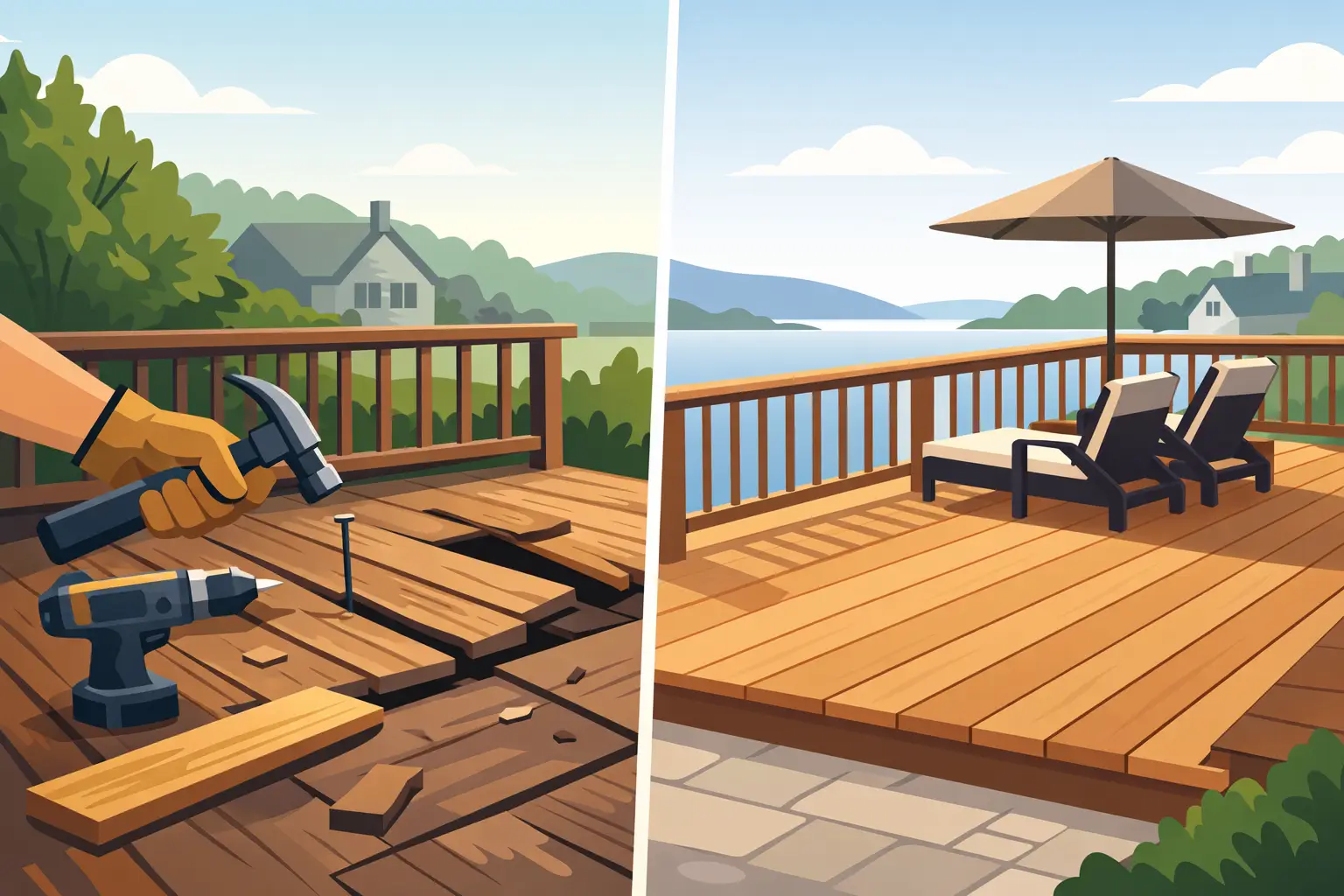
A few loose boards may seem like a simple weekend problem. But when a deck feels soft underfoot, pulls away from the house, or shows years of water damage after Connecticut winters, the decision is much bigger. Deck repair vs replacement is ultimately a question of safety, structural condition, and whether your investment will last.
A well-built deck should give your family a dependable outdoor space for years. When it begins to fail, patching visible damage can be the right answer in some cases. In others, repairs only postpone a larger and more expensive problem. A professional inspection helps separate a surface issue from a deck that has reached the end of its service life.
Deck Repair vs Replacement Starts With Safety
The deck boards are only one part of the structure. Beneath them are joists, beams, posts, footings, fasteners, railings, and the ledger board that attaches the deck to the home. Damage in any of these areas can affect how safely the deck carries weight.
Cosmetic wear is usually repairable. Faded color, peeling stain, a cracked board or two, and a loose railing connection may not mean the entire deck needs to come down. However, widespread rot, unstable framing, or a weak connection to the house calls for a closer look before anyone uses the space.
Pay particular attention to soft spots, bouncy areas, visible rot around posts, rusted hardware, and railings that move when pushed. These are not details to ignore. A deck can look acceptable from the yard while hidden moisture damage has weakened the framing below.
Connecticut’s snow, rain, freeze-thaw cycles, and humid summers put consistent stress on exterior wood. Water that gets into untreated end grain, cracks, or poorly flashed connections can create damage slowly. By the time boards begin to cup or feel soft, the problem may extend below the surface.
When Deck Repair Is the Better Choice
Repair is often the practical option when damage is limited and the deck’s core structure remains solid. For example, replacing a handful of worn boards can restore a safe walking surface if the joists beneath them are dry, properly spaced, and in good condition. Refastening a loose railing, replacing damaged stair treads, or updating corroded connectors can also provide real value when the rest of the deck is sound.
A repair may make sense if your deck is relatively new, the original materials were installed correctly, and the problem has a clear cause that can be fixed. A leaking gutter that has been directing water onto one corner of the deck, for instance, should be corrected along with any localized wood damage. Otherwise, even a quality repair will be exposed to the same moisture problem.
Repairs are also worth considering when homeowners want to maintain the existing size and layout, and the cost of targeted work is far below the cost of a new deck. The key is making sure the work addresses the source of deterioration, not just the visible result.
Signs It Is Time to Replace the Deck
Replacement is usually the smarter long-term choice when structural damage is widespread or repeated repairs are becoming routine. A new surface installed over failing framing does not solve the underlying concern. It can also create a false sense of security and leave homeowners facing another major expense sooner than expected.
Replacement should be strongly considered when the deck has significant rot in the joists, beams, posts, or ledger board. It is also often the right path if the footings have shifted, the deck is pulling away from the house, or the stairs and railings no longer meet basic safety expectations. These issues affect the entire system, not just a few boards.
Age matters, but condition matters more. Some older decks remain structurally sound because they were built well and maintained consistently. Others deteriorate early due to poor drainage, inadequate flashing, low-quality materials, or years of deferred maintenance. A professional contractor can assess the framing, attachment points, and support system to determine whether repair would be dependable.
Replacement also gives homeowners the opportunity to improve a deck that no longer fits how they use their home. A cramped platform, unsafe stairs, awkward access to the yard, or a lack of usable space may not justify major repairs. Building a new deck allows for a better layout, updated railings, durable materials, and a finished look that adds to curb appeal.
Compare the Cost Beyond the Initial Quote
The least expensive option today is not always the best value. A small repair can be cost-effective when it gives the deck several more safe years of use. But paying for board replacements, railing repairs, and framing corrections year after year can add up quickly. If the deck needs multiple repairs at once, replacement may provide a more predictable investment.
Homeowners should compare the scope of work, expected lifespan, maintenance needs, and warranty coverage. Ask whether the proposed repair will correct the cause of the problem and how much of the existing structure will remain. For replacement, ask what materials will be used, how the deck will be attached to the home, and whether the design accounts for drainage and local code requirements.
Material selection also changes the long-term calculation. Pressure-treated wood can be a reliable, budget-conscious choice when maintained properly. Composite decking generally costs more upfront but can reduce staining, sealing, and board replacement over time. Railings, fasteners, and trim materials deserve the same attention because they affect both safety and appearance.
There is no single answer for every Connecticut home. A repair can be the right choice for a structurally sound deck with isolated damage. Full replacement makes more sense when the framing is compromised, the deck no longer meets your needs, or repair costs are approaching the price of a new installation.
Why a Professional Deck Assessment Matters
A reliable assessment should go beyond what is visible from the top of the deck. A qualified crew will inspect the boards, framing, ledger connection, posts, footings, stairs, railings, hardware, and areas where water may be entering. This provides a clearer recommendation and helps homeowners avoid spending money on short-term work that does not address a safety issue.
Professional installation also matters when replacement is needed. Proper flashing at the house connection, secure footings, correct framing, and quality fastening methods all play a direct role in how a deck performs through changing seasons. The finished deck should look good, but it should also be built to handle daily use and Connecticut weather.
Siding Unlimited CT brings more than 20 years of exterior renovation experience to homeowners who need dependable deck replacement and installation. The goal is straightforward: provide clear recommendations, quality workmanship, and a finished outdoor space built for long-term value.
If your deck has become a concern rather than a place to enjoy, do not wait for another season of moisture and wear to make the decision for you. A professional evaluation can show whether a focused repair is still worthwhile or whether a new deck is the safer investment for your home.
Share this post