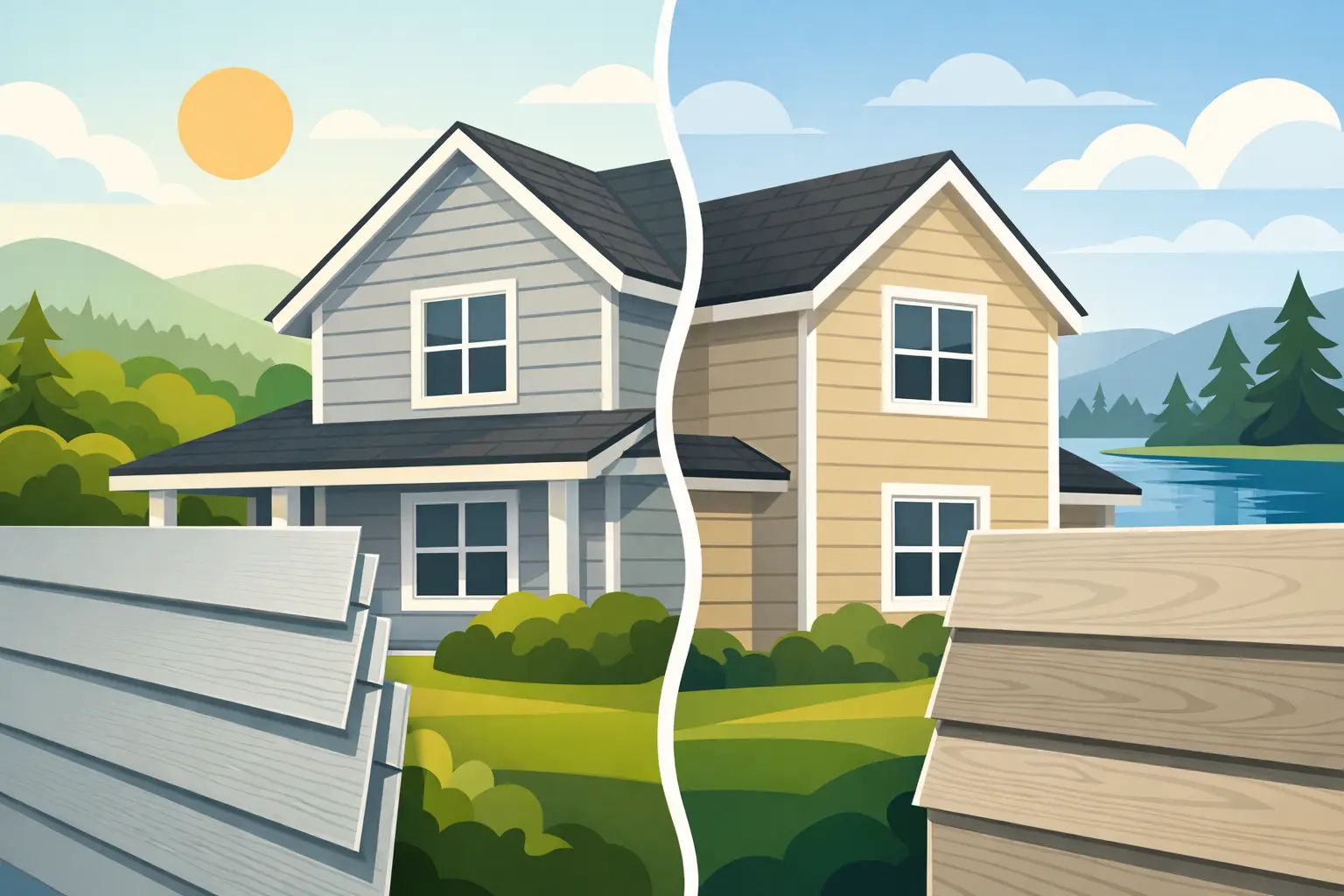
A Connecticut exterior has to handle more than a few rainy weekends. It faces snow, freeze-thaw cycles, humidity, wind, and summer sun year after year. When comparing vinyl siding vs fiber cement, the right choice comes down to your home’s condition, the look you want, your maintenance expectations, and how much you plan to invest in the project.
Both materials can protect and improve a home when installed correctly. They are not interchangeable, though. Vinyl is generally the more budget-friendly, low-maintenance option. Fiber cement offers a heavier, more traditional appearance and strong resistance to fire, insects, and impact, but it requires a larger upfront investment and more involved installation.
Vinyl Siding vs Fiber Cement at a Glance
| Factor | Vinyl Siding | Fiber Cement Siding | |—|—|—| | Upfront cost | Typically lower | Typically higher | | Appearance | Many colors and profiles | Can closely resemble painted wood | | Maintenance | Low | Moderate | | Moisture resistance | Does not absorb moisture | Resists moisture when properly finished | | Fire resistance | Can melt or warp under intense heat | Noncombustible material | | Weight and installation | Lightweight, faster to install | Heavy, labor-intensive installation | | Painting | Color is built in | Usually needs repainting over time |
The best material is the one that fits the home and the homeowner. A siding choice should also account for the condition of your sheathing, trim, insulation, windows, gutters, and roofline. Replacing siding is often the right time to address exterior details that affect weather protection and curb appeal.
Why Many Connecticut Homeowners Choose Vinyl Siding
Vinyl siding remains a practical choice for homeowners who want dependable protection, attractive color options, and a reasonable project cost. Modern vinyl is available in a wide range of profiles, including traditional lap siding, Dutch lap, shakes, and board-and-batten styles. It can give an older home a clean, updated appearance without the ongoing painting requirements of wood.
Maintenance is one of vinyl’s strongest advantages. It does not need to be painted, and routine care usually means rinsing off dirt, pollen, and mildew with a garden hose or a gentle exterior cleaning solution. The color runs through the material, so small surface scratches are often less noticeable than they would be on painted siding.
Vinyl is also lightweight and efficient to install. That can help keep labor costs lower and reduce the length of the project, especially on a straightforward home with accessible walls. Quality installation still matters. Panels need room to expand and contract with changing temperatures, and details around windows, doors, corners, soffits, and trim must be properly flashed and finished.
For homeowners concerned about energy efficiency, insulated vinyl siding can be worth discussing. The foam backing can help reduce thermal bridging through exterior wall framing and create a more solid appearance. It is not a replacement for proper wall insulation, air sealing, or efficient windows, but it can support a stronger exterior renovation plan.
Vinyl siding trade-offs to consider
Vinyl siding is durable, but it is not indestructible. In very cold temperatures, a hard impact from a branch, ball, or lawn equipment can crack a panel. Extreme heat can cause it to warp or melt, particularly near a grill, fire pit, or a window that reflects concentrated sunlight.
It also has a distinct look. Premium vinyl profiles have improved significantly, but some homeowners prefer the deeper shadow lines and painted finish associated with fiber cement or natural wood. If architectural character is the main priority, vinyl may not be the first choice for every property.
When Fiber Cement Makes Sense
Fiber cement siding is made from a blend of cement, sand, and cellulose fibers. It is valued for its substantial feel, clean lines, and ability to replicate the look of painted wood clapboards, shingles, and vertical panels. For homeowners updating a historic-style home or seeking a more traditional exterior design, fiber cement can be an excellent fit.
Its resistance to pests is another major benefit. Unlike wood, it is not a food source for termites or carpenter ants. It also does not rot in the same way wood can when it is exposed to moisture. Fiber cement is noncombustible, making it a strong choice for homeowners who place a high value on fire resistance.
The material handles Connecticut’s changing seasons well when it is installed according to manufacturer specifications. Proper clearances from roofing, decks, walkways, and soil are essential. The siding must be correctly flashed at every opening and transition, and cut edges and penetrations need appropriate finishing to prevent moisture problems.
Fiber cement also gives homeowners more flexibility to change colors in the future. Factory-finished products offer durable, consistent color from the start. Primed boards can be painted in nearly any color, which is useful when a homeowner wants a specific design direction or plans to refresh the exterior years later.
The cost and maintenance side of fiber cement
Fiber cement usually costs more than vinyl because the material is heavier, more difficult to cut, and more labor-intensive to install. It requires experienced crews with the right tools and knowledge of fastening patterns, joints, clearances, and weather barriers. Installation shortcuts can lead to cracked boards, moisture intrusion, and premature finish failure.
It also needs periodic attention. While factory finishes can last for many years, painted fiber cement will eventually need repainting or touch-ups. Caulked joints and trim should be inspected as part of normal exterior maintenance. That is not a reason to avoid the product, but it should be part of the long-term budget.
Durability Depends on Installation, Not Just Material
Homeowners often ask which option lasts longer. The honest answer is that both can provide long service life when they are installed professionally and maintained appropriately. Product quality matters, but the system behind the siding matters just as much.
Before new siding goes on, a contractor should evaluate the wall surface for damaged sheathing, signs of water entry, rotted trim, and poorly detailed window or door openings. A quality installation includes a reliable water-resistive barrier, proper flashing, correct fasteners, and finished details that direct water away from the house.
This is particularly important in Connecticut, where wind-driven rain and winter weather can expose weak spots quickly. New siding can improve curb appeal immediately, but its real job is protecting the structure beneath it. Choosing the lowest price without reviewing the scope of work can lead to expensive repairs later.
How to Choose the Right Siding for Your Home
Choose vinyl siding if you want a cost-conscious exterior update with minimal maintenance, reliable weather resistance, and a wide selection of colors and profiles. It is often a strong fit for homeowners who want a clean, durable result without budgeting for future repainting.
Choose fiber cement if you want a more substantial, painted-wood appearance, strong fire and pest resistance, and greater design flexibility. It can be a worthwhile investment for homes where architectural style and long-term exterior character are the deciding factors.
There are also situations where a mixed approach works well. A homeowner may choose vinyl lap siding for broad wall areas and use fiber cement-style trim or other premium accents around gables, entryways, and porches. The right combination depends on the home’s design, budget, and maintenance goals.
Get a Siding Recommendation Based on Your Home
A reliable siding estimate should be more than a price per square foot. It should explain the material options, identify necessary repairs, describe flashing and weather-protection work, and clarify how trim, soffits, gutters, and window details will be handled. That level of planning helps prevent surprises once work begins.
Siding Unlimited CT brings more than 20 years of exterior renovation experience to Connecticut homeowners who need professional siding replacement. Our certified crews focus on quality installation, durable products, timely service, and clear recommendations based on the condition of your home.
The best siding choice is not always the most expensive one. It is the material installed correctly, suited to your home’s needs, and built to protect it through the next Connecticut winter and beyond.
Share this post