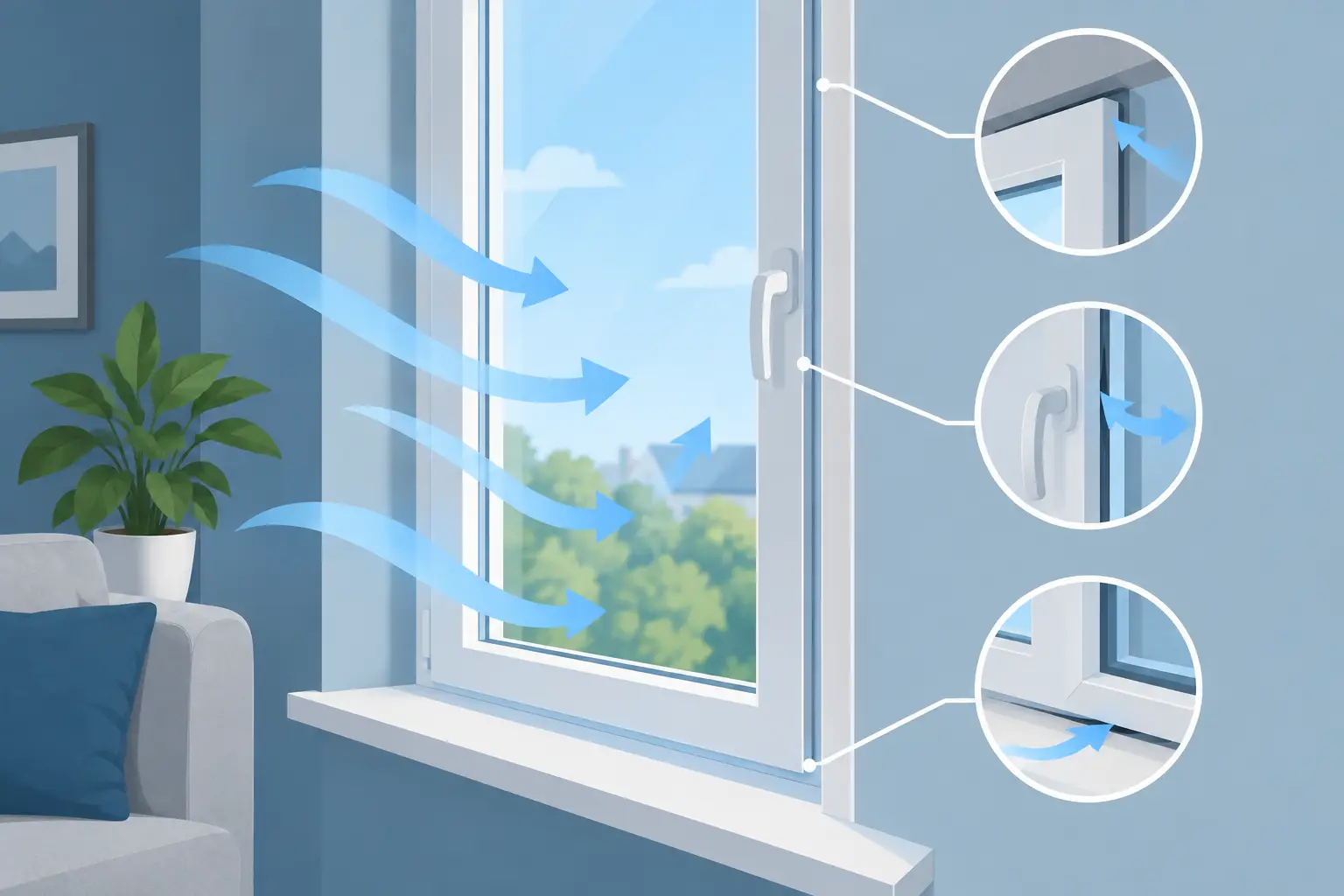
A cold draft near a window is easy to notice on a Connecticut winter morning. The room feels uneven, the thermostat runs longer, and curtains may move even when every window is shut. Why do windows leak air? Usually, the problem is not the glass alone. Air can enter through worn seals, failed weatherstripping, gaps around the frame, or an installation issue that was hidden behind trim.
A small draft can become an expensive comfort problem over time. It forces your heating and cooling system to work harder, creates cold spots near exterior walls, and may point to moisture concerns that deserve attention. Identifying the source is the first step toward deciding whether a repair will solve the issue or whether replacement is the better long-term investment.
Why Do Windows Leak Air Around the Frame?
Many homeowners assume a draft means the window itself has failed. In some cases, that is true. But air often leaks through the connection between the window and the wall rather than through the operating sash.
During installation, the rough opening around a window needs to be properly insulated, sealed, and flashed. If there are voids in that area, outside air can travel behind the interior casing and into the room. This can happen with older windows, but it can also happen when a previous installation was rushed or the surrounding materials have shifted over time.
Connecticut homes experience wide temperature swings, snow, rain, and seasonal expansion and contraction. Those conditions can stress caulk, sealants, siding details, and the materials around a window opening. A gap that seemed minor in mild weather may become obvious during a January cold snap or a humid summer day.
Clues that the frame area may be the issue include drafts at the sides or top of the window, loose interior trim, cracked exterior caulk, or a noticeable temperature difference along the wall surrounding the window. A professional inspection can determine whether the opening can be resealed or whether water damage has affected the framing or exterior materials.
Worn Weatherstripping and Window Seals
Windows that open and close rely on weatherstripping to create a tight seal when locked. Over time, this material can flatten, tear, become brittle, or pull away from the sash. When that happens, air slips through the meeting points where the sash closes against the frame.
This is especially common with older double-hung windows. If the locks do not pull the sashes tightly together, or if the window no longer sits square in its frame, the weatherstripping cannot do its job. You may feel air around the bottom rail, at the meeting rail between the upper and lower sash, or near the locking side of the window.
Some weatherstripping can be replaced as a targeted repair. That makes sense when the window is otherwise in good condition, operates smoothly, and has no signs of moisture damage. However, replacing weatherstripping will not correct a warped sash, damaged frame, broken hardware, or a window that has reached the end of its service life.
Glass units have seals as well. Modern insulated windows use two or more panes of glass with a sealed space between them. When the perimeter seal fails, moisture can enter between the panes, causing fogging, haze, or visible droplets. A failed glass seal does not always create a direct draft, but it reduces the window’s insulating performance and is often a sign that replacement should be considered.
Poor Installation Can Cause Persistent Drafts
A quality window is only as effective as its installation. Even a premium, energy-efficient window can leak air if it is not measured, leveled, fastened, insulated, and sealed correctly.
Common installation problems include gaps left around the rough opening, insufficient low-expansion foam insulation, missing or failed flashing, and exterior caulk applied where it cannot create a lasting seal. Sometimes a replacement window is installed into an existing frame that has hidden rot or structural movement. The new window may look finished from inside the home while the underlying opening remains vulnerable to air and water intrusion.
Installation details matter because windows are part of the entire exterior envelope. Siding, trim, house wrap, flashing, roofing, gutters, and doors all direct water away from the structure. If one component is not properly integrated, moisture can reach the window opening and gradually damage the materials that keep air out.
This is why a professional evaluation is more valuable than simply adding caulk wherever a draft is felt. The visible symptom may be inside the home, while the actual cause is outside the window or behind the trim.
Age, Damage, and Window Design Matter Too
Older single-pane windows naturally provide less insulation than modern insulated glass units. They may also use aging wood frames, loose glazing compound, outdated balances, and hardware that no longer closes tightly. Storm windows can improve performance in some cases, but they do not always address deteriorated frames or major gaps around the opening.
Wood windows can develop air leaks when paint fails, joints separate, or moisture causes the frame or sash to swell and shrink. Vinyl windows generally require less maintenance, but they can still leak if the frame is cracked, the sash is damaged, or the weatherstripping is worn. Aluminum windows are durable, yet older designs can transfer outdoor temperatures into the home and may have poor insulating performance compared with current replacement options.
A window does not have to be visibly broken to be inefficient. If you consistently avoid sitting near a particular window, notice ice buildup on the interior during severe weather, or find that one room is much harder to heat or cool, the window system deserves a closer look.
How to Tell if the Draft Is From the Window
Homeowners can spot several warning signs without taking anything apart. On a cold or windy day, move your hand slowly around the edges of the closed window and interior trim. A noticeable change in temperature can help identify where air is entering. You may also see curtains move, hear rattling in the sash, or notice daylight through gaps around a frame.
Look outside as well. Cracked caulk, separated trim, damaged siding, missing exterior sealant, and stains beneath a window can all point to a larger issue. Inside, peeling paint, soft drywall, discoloration, or a musty odor near the opening may indicate moisture intrusion rather than a simple air leak.
Avoid relying on temporary fixes as a permanent answer. Plastic film kits, rope caulk, and draft stoppers can provide short-term relief during a heating season. They can be useful while planning a repair or replacement, but they do not fix failed installation details, rotted framing, or windows that no longer seal correctly.
When Repair Makes Sense
Repair can be a practical option when the leak is limited to replaceable weatherstripping, minor exterior caulk failure, loose hardware, or a small gap around trim. A properly completed repair can improve comfort and extend the useful life of a window that is otherwise sound.
The decision depends on the age and condition of the window, the extent of the leak, and whether water has reached the wall system. For example, a newer window with a damaged sealant joint may need a focused repair. An older window with fogged glass, failed weatherstripping, warped sashes, and deteriorated frames is usually a different situation. Repeated small repairs can cost more in the long run while leaving the home less comfortable and less efficient.
When Window Replacement Is the Better Value
Replacement is often the smarter choice when several windows are drafty, difficult to operate, visibly damaged, or nearing the end of their expected lifespan. Modern replacement windows can offer improved glass packages, insulated frames, better weatherstripping, and tighter locking systems. Just as important, they give the installer an opportunity to inspect the opening, correct hidden issues, and create a properly sealed connection to the home.
The right window should suit the house, the exposure, and the homeowner’s goals. A south-facing window may need different glass performance than one exposed to strong winter winds. Appearance, ventilation, maintenance needs, and budget all matter. The goal is not simply to install a new unit. It is to improve comfort, efficiency, and long-term protection for the home.
For Connecticut homeowners, a drafty window is worth addressing before another heating or cooling season makes the problem more costly. A careful inspection by an experienced exterior contractor can identify the source, explain the practical options, and help you choose work that protects your home for years to come.
Share this post