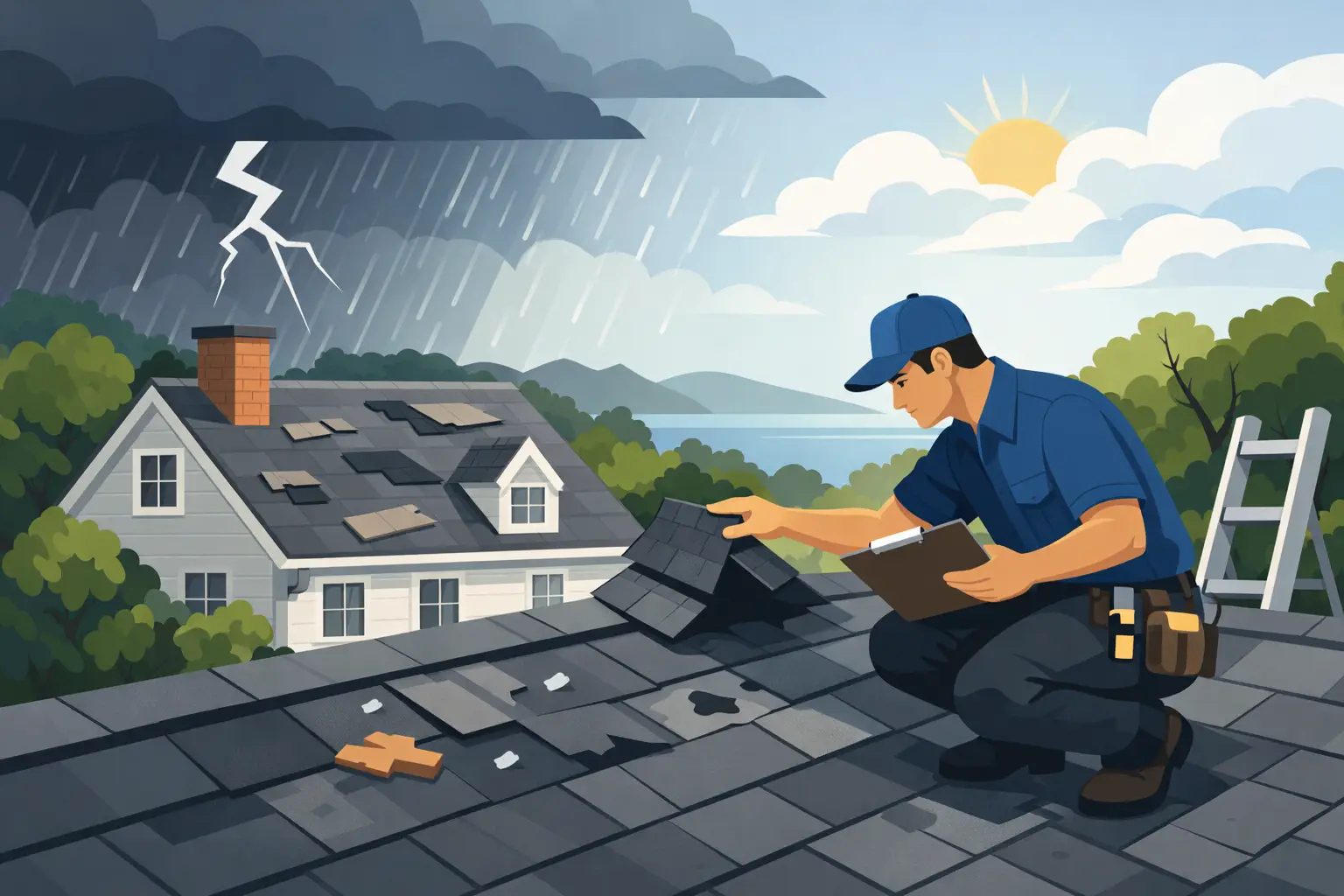
A storm can leave a roof looking normal from the driveway while water is already finding its way beneath shingles, around flashing, or into the attic. A professional storm damage roof inspection gives Connecticut homeowners a clear answer before a small issue becomes a costly interior repair. After heavy wind, hail, driving rain, or falling branches, the right time to inspect is soon – not when a ceiling stain appears weeks later.
When Your Roof Should Be Inspected After a Storm
Not every rain shower requires a service call. Connecticut roofs are built to handle regular weather, and a qualified contractor should help homeowners distinguish between normal wear and damage that needs attention. Still, certain conditions call for a prompt inspection.
Schedule an inspection after strong winds have lifted or blown debris across the roof, hail has hit your neighborhood, a branch has made contact with the home, or heavy rain has caused water to back up near gutters and roof edges. An inspection also makes sense when nearby homes have visible damage. Wind patterns can vary from one property to the next, but storms often affect multiple homes in the same area.
You should also act quickly if you see missing shingles, shingle pieces in the yard, bent gutter sections, loose fascia, water marks on ceilings, or damp insulation in the attic. These signs do not always reveal the full extent of the problem. A missing shingle is obvious; lifted shingle seals and compromised flashing are not.
Waiting can increase the scope of work. Water that enters through a small opening may damage roof decking, insulation, drywall, trim, and even electrical components over time. Early inspection is usually the most practical way to protect the home and control repair costs.
What a Storm Damage Roof Inspection Includes
A professional inspection is more than a quick look at the shingle color from the ground. The goal is to identify where the roof system may have lost its ability to shed water. That system includes shingles, underlayment, flashing, vents, ridge caps, roof edges, gutters, and the structure beneath them.
Shingle and roof-surface condition
Wind can crease, lift, crack, or tear shingles without removing them completely. A contractor checks for displaced tabs, broken seals, exposed nail heads, granule loss, punctures, and damaged ridge caps. Hail can leave impact marks that may shorten shingle life even when there is no immediate leak.
The age and condition of the roof matter here. An older roof with brittle shingles may sustain more damage from a storm than a newer roof exposed to the same conditions. This does not automatically mean full replacement is necessary. It means the repair recommendation should account for the roof’s remaining service life, matching materials, and the likelihood of future failures.
Flashing, penetrations, and roof edges
Many roof leaks begin around areas where the roof changes direction or where something passes through it. Flashing around chimneys, skylights, valleys, wall intersections, plumbing vents, and exhaust vents needs close attention after wind and rain.
These details are especially important because a roof can have intact shingles and still leak at a compromised flashing point. The inspector should also evaluate drip edges, rake edges, soffit areas, and fascia boards for signs of wind damage or water intrusion.
Gutters and drainage paths
Gutters are part of the home’s exterior protection system. Heavy rain and wind can clog them with leaves, pull them away from the fascia, bend downspouts, or cause seams to separate. When water cannot move away from the roof edge, it may back up under shingles or spill near the foundation.
A roof inspection should consider whether drainage problems contributed to the damage. In some cases, a roof repair alone is not the complete solution. Gutter repair or replacement may be needed to help protect the roof, siding, trim, and foundation during the next storm.
Attic and interior moisture checks
Exterior damage tells only part of the story. When conditions allow, an inspector may look for damp sheathing, staining, mold-like growth, wet insulation, or daylight entering the attic. These findings can help identify whether water has penetrated the roof system.
Interior ceiling stains deserve attention, but their location can be misleading. Water often travels along framing members before it becomes visible indoors. A professional assessment traces the likely source rather than simply repairing the spot where the stain appeared.
Why a Ground-Level Check Is Not Enough
Homeowners should never climb onto a wet, steep, or storm-damaged roof. A ground-level walkaround is useful for spotting obvious issues, but it cannot confirm the condition of the full system. Damage can be hidden beneath lifted shingles, under accumulated debris, or at roof transitions that are difficult to see safely.
A qualified contractor has the experience to evaluate the roof closely and safely. They can also tell the difference between storm-related damage, normal aging, poor past installation, and issues caused by clogged gutters or ventilation problems. That distinction matters because the right repair depends on the actual cause.
It also helps homeowners avoid two costly mistakes: paying for unnecessary work or delaying work that should be completed promptly. A dependable inspection should provide clear findings and a practical recommendation, not pressure or vague language.
Repair or Replacement: How the Decision Is Made
Storm damage does not always require a new roof. If damage is limited to a small area and the existing roof is otherwise in good condition, a targeted repair may be the best value. Replacing damaged shingles, repairing flashing, securing ridge caps, or correcting gutter problems can restore protection without replacing the full roof.
Replacement may be the better long-term choice when the roof is near the end of its expected life, damage is widespread, leaks have affected the decking, or matching repair materials are unavailable. It may also make sense when multiple exterior components have been affected and the homeowner wants one coordinated project.
The decision should be based on the roof’s condition, not a one-size-fits-all answer. A professional contractor should explain the options, expected scope of work, and cost considerations in straightforward terms. For Connecticut homeowners, the goal is durable protection through changing seasons, not a temporary fix that creates another problem next year.
What to Do Before and After the Inspection
After a storm, start with safety. Stay clear of downed power lines, unstable trees, and loose pieces of siding, gutters, or roofing. From the ground, take photos of visible debris, fallen branches, missing shingles, and any interior water staining. If active water is entering the home, move belongings out of the affected area and place containers beneath drips where safe to do so.
Avoid covering a roof with a tarp yourself unless it can be done safely from the ground or by a qualified professional. Improperly placed tarps can create additional damage, trap water, or put someone at serious risk. A contractor can recommend appropriate temporary protection when immediate repairs cannot be completed due to weather or material availability.
Keep records of the storm date, visible damage, inspection findings, estimates, and any emergency work performed. If you plan to contact your insurance carrier, clear documentation can support that conversation. Your contractor can explain the condition of the roof and the recommended work, while your insurer determines coverage under your policy.
Choose a Contractor Who Looks at the Whole Exterior
A roof rarely works alone. Storm damage can affect gutters, siding, trim, windows, and doors at the same time. Choosing a contractor with experience across the home exterior can prevent disconnected repairs and help ensure water is directed away from vulnerable areas.
Siding Unlimited CT brings more than 20 years of exterior renovation experience to roof, gutter, siding, window, and door projects throughout Connecticut. Our certified crews focus on professional installation, dependable scheduling, premium materials, and clear recommendations that fit the condition of your home.
A prompt inspection does more than identify missing shingles. It gives you a reliable starting point for protecting your home, planning the right work, and moving forward before the next Connecticut storm tests the roof again.
Share this post