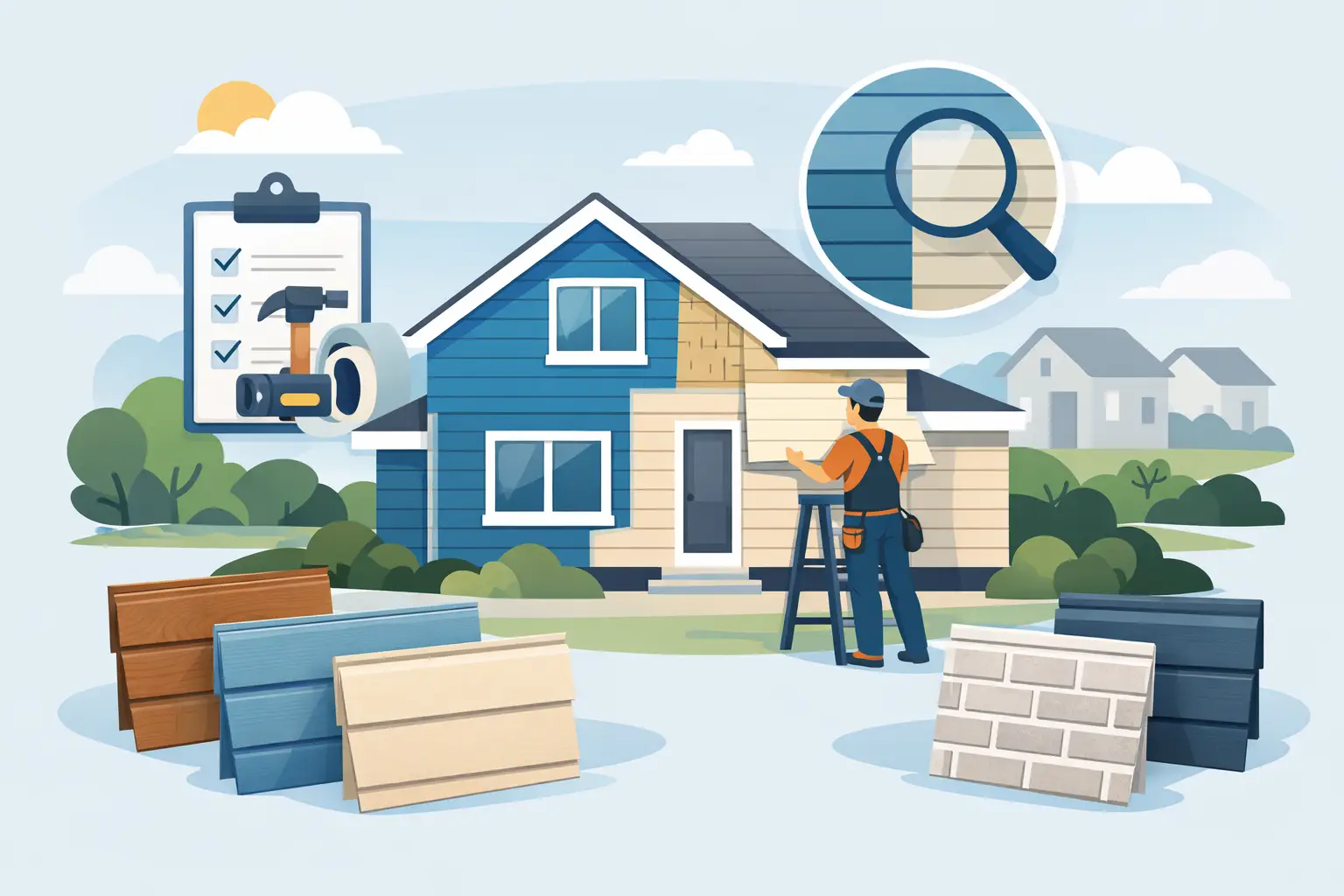
A siding replacement is not just a cosmetic update. It protects the structure of your home, affects energy efficiency, and can change how much maintenance you handle every year. Knowing how to choose replacement siding means looking beyond color samples and comparing materials, installation quality, and long-term value for your Connecticut property.
The right choice depends on your home’s condition, your budget, the level of upkeep you want, and the weather your exterior must handle. Connecticut homes face humid summers, cold winters, heavy rain, wind, and freeze-thaw cycles. Your new siding should be built and installed to perform through all of it.
Start With the Problems Your Current Siding Has
Before selecting a material, identify why you are replacing your siding. Faded color or an outdated appearance may make curb appeal your main priority. Cracks, warping, loose panels, moisture stains, soft areas, or rising heating and cooling costs point to a larger performance issue.
Siding can hide damage beneath the surface. Water that enters through gaps, damaged trim, or failing caulk may affect sheathing, insulation, and framing over time. A professional inspection helps determine whether the project requires only new siding or whether repairs to the underlying structure are needed first.
This is also a good time to evaluate other exterior components. Windows, doors, gutters, and roofing all work with siding to protect your home. Replacing related materials together can create a cleaner finished appearance and prevent one aging component from affecting the performance of another.
Compare Replacement Siding Materials by Real-World Performance
There is no single best siding material for every home. The best fit is the one that meets your goals for durability, appearance, maintenance, and cost.
Vinyl Siding
Vinyl siding remains a popular choice because it provides dependable protection at a reasonable price. It is available in many colors and profiles, does not require painting, and holds up well against moisture. For homeowners who want a clean look with low routine maintenance, vinyl is often a practical option.
Quality matters. Thicker, premium vinyl panels tend to resist impacts and warping better than entry-level products. Look for siding designed to handle temperature changes and wind exposure, especially on open properties or homes near the Connecticut shoreline.
Insulated Vinyl Siding
Insulated vinyl siding adds a layer of rigid foam behind the panel. This can improve the finished appearance by creating a straighter profile and may help reduce thermal bridging through exterior walls. It is worth considering for homeowners focused on energy efficiency, comfort, and a more substantial look.
Insulated siding is usually a higher initial investment than standard vinyl. Its value depends on the home’s existing insulation, the condition of the walls, and the quality of installation. It should be part of an overall energy-efficiency plan rather than the only solution for high utility bills.
Fiber Cement Siding
Fiber cement is known for its solid appearance, durability, and ability to resemble painted wood. It is resistant to insects and rot, and it can be a strong choice for homeowners who prefer a traditional architectural look.
The trade-off is cost and maintenance. Fiber cement requires professional installation because it is heavier and more labor-intensive to handle. It also needs periodic repainting or finish maintenance over its lifespan. For the right home, it offers excellent curb appeal, but it is not the lowest-maintenance option.
Engineered Wood Siding
Engineered wood siding offers the warmth and character of wood with improved resistance to moisture and insects compared with traditional wood products. It can be an attractive option for homeowners who want detailed trim, wider boards, or a more classic exterior style.
As with any wood-based product, proper installation and maintenance are essential. Flashing, caulking, clearances from roofing and ground surfaces, and paint or finish care all affect how well it performs over time.
Choose a Style That Fits the Home, Not Just the Trend
Color gets attention, but profile and trim details do just as much to shape a home’s exterior. Horizontal lap siding is versatile and works well on many colonial, ranch, and contemporary homes. Vertical siding can add height or create contrast on gables, entryways, and accent walls. Shakes and shingles bring texture and are often used in gable peaks or as a feature around porches and bays.
When choosing a color, consider permanent features such as brick, stone, roofing, and window trim. A color that looks good on a small sample may appear much lighter or darker across a full exterior. Viewing larger samples outdoors at different times of day helps avoid surprises.
Neutral siding colors often provide broad appeal, while darker colors can add contrast and a more modern appearance. Darker colors may show dust, pollen, and weathering more easily depending on the material and exposure. The right choice should complement the home and remain one you will be comfortable seeing every day.
Put Installation Quality at the Center of the Decision
Even premium siding can fail if it is installed incorrectly. Poor fastening, missing flashing, improper trim work, or inadequate water management can lead to loose panels, leaks, and premature wear.
A professional siding contractor should inspect the existing exterior, explain the condition of the walls, and provide a clear scope of work. That scope should address removal of old siding when necessary, preparation and repair of the substrate, moisture protection, flashing around windows and doors, trim, ventilation considerations, and cleanup.
Ask who will perform the work and whether the installation crew is trained or certified for the products being used. Experienced crews understand that siding needs room to expand and contract, and they know how to create clean transitions at corners, rooflines, doors, and windows. Those details protect your investment and make the finished job look complete.
Consider Energy Efficiency as Part of the Whole Exterior
New siding can support a more comfortable, efficient home, particularly when the existing exterior has gaps, damaged house wrap, or poor insulation. However, siding alone does not solve every energy issue.
Drafty windows, aging doors, attic insulation, roof ventilation, and air leaks can all affect heating and cooling costs. A contractor who can assess the full exterior can help you prioritize the work that delivers the most value. In some cases, combining siding with window, door, or gutter replacement makes more sense than handling each issue separately.
For Connecticut homeowners, moisture control is equally important. Properly installed weather-resistive barriers, flashing, and trim help direct water away from the structure. That protection matters in every season, from spring rain to snow and ice.
Set a Budget Around Long-Term Value
The least expensive estimate is not always the most affordable project over time. A lower price may exclude necessary repairs, use thinner material, or leave out important finishing details. Compare proposals based on what is included, not just the total at the bottom of the page.
A detailed quote should identify the siding product, trim materials, labor, removal and disposal, any anticipated repairs, and warranty information. If one estimate is significantly lower than the others, ask what has been omitted. Clear answers before work begins help prevent unexpected costs later.
It also helps to think about how long you plan to stay in the home. If you expect to remain for many years, durable materials and professional installation can provide better long-term value. If you plan to sell sooner, choose an option that improves curb appeal, protects the property, and fits the neighborhood without overbuilding for the market.
How to Choose Replacement Siding With Confidence
The best replacement siding project begins with an honest assessment of your home and a contractor who explains the options clearly. Material choice matters, but so do wall preparation, moisture protection, trim work, and the crew performing the installation.
At Siding Unlimited CT, homeowners can expect straightforward recommendations, premium products, and professional installation backed by more than 20 years of exterior renovation experience. A detailed quote and a careful on-site evaluation can help you choose siding that looks right, performs well, and protects your home for years to come.
Share this post