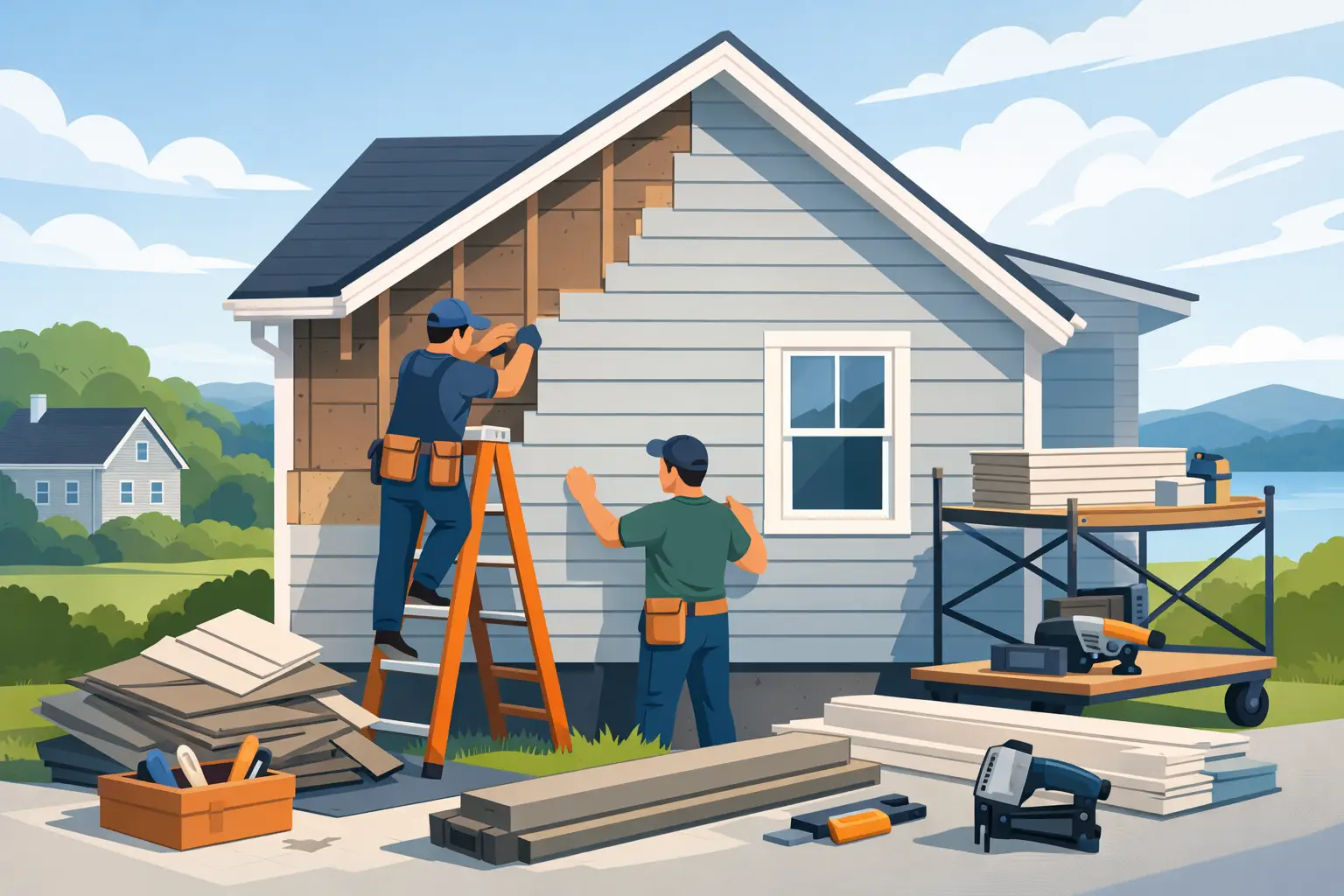
A home’s siding does more than create curb appeal. It protects framing, insulation, and interior spaces from Connecticut’s rain, snow, wind, humidity, and seasonal temperature swings. This complete siding replacement guide helps homeowners recognize when replacement is the right decision, understand the work involved, and choose a contractor and material that will hold up for years.
For many homeowners, siding replacement begins with a visible problem: faded panels, loose boards, peeling paint, or a repair that keeps coming back. The real concern is often behind the surface. Moisture can enter through failed seams, damaged flashing, or cracked siding and cause hidden damage long before it appears inside the home. Addressing the issue early protects both your property and your budget.
When Siding Replacement Makes More Sense Than Repair
A small, isolated area of damage can often be repaired. A few loose vinyl panels, a damaged trim piece, or a single board affected by impact does not always require a full replacement. However, repairs become less practical when the siding is aging across multiple walls, matching materials are no longer available, or water damage has spread behind the exterior.
Watch for several signs that point toward replacement:
- Cracked, warped, loose, or missing siding panels
- Rotting wood, soft spots, or recurring mold and mildew
- Peeling paint or frequent repainting needs
- Higher heating and cooling bills with no clear explanation
- Faded, brittle, or outdated siding that reduces curb appeal
Connecticut homes are especially vulnerable to moisture-related issues. Freeze-thaw cycles can widen small cracks, while heavy rain and ice dams can expose weak points around windows, doors, rooflines, and trim. If siding damage is widespread or the home has repeated leaks, replacement gives you the chance to correct the exterior system as a whole instead of treating symptoms one repair at a time.
What a Complete Siding Replacement Includes
A professional siding project should not begin and end with installing new panels. Quality results depend on the condition of the wall underneath and the details that direct water away from the home.
The process begins with an inspection and clear estimate. A contractor should assess the siding, trim, soffits, fascia, exterior walls, window and door openings, and areas where siding meets roofing or masonry. This helps identify visible damage and potential concerns that may need attention once the existing siding is removed.
During installation, the crew removes old siding as needed and evaluates the wall sheathing. Any damaged material should be repaired before the new exterior is installed. The home then receives the proper weather-resistant barrier and flashing details around openings and transitions. These layers are essential because siding is designed to shed water, not serve as the only line of defense against it.
New siding, trim, and finishing pieces are installed according to the manufacturer’s requirements. Proper spacing, fastening, and flashing matter as much as the product itself. Panels installed too tightly can buckle as temperatures change. Incorrect flashing can allow water behind an otherwise attractive new exterior. Experienced, certified installers protect the long-term performance of the job by getting these details right.
Depending on the home’s condition and your goals, a complete project may also include replacement trim, soffit and fascia work, gutters, windows, or exterior doors. Coordinating related improvements at the same time can be more efficient and can create a cleaner, more finished result.
Choosing the Right Siding Material
The best siding material depends on your home’s style, maintenance expectations, budget, and long-term plans. There is no single right choice for every Connecticut homeowner.
Vinyl siding remains a popular option because it offers dependable weather resistance, low maintenance, and a wide range of colors and profiles. It does not require painting, and quality products can provide a clean, consistent appearance for many years. Vinyl can be a strong value for homeowners who want a durable exterior at a reasonable price.
Fiber cement siding offers a more substantial appearance and can resemble painted wood. It is known for durability and resistance to rot, insects, and fire. It may carry a higher upfront cost and typically requires painting or factory-applied finishes, but it can be a good fit for homeowners seeking a traditional look with long-term performance.
Engineered wood siding provides another option for homeowners who prefer a wood-style exterior. It can offer a detailed appearance while addressing some of the maintenance concerns associated with natural wood. Like any siding material, it must be installed correctly and maintained according to product guidelines.
Natural wood has timeless character, but it requires the most ongoing attention. Painting, staining, caulking, and prompt repairs are necessary to protect it from moisture and insects. For homeowners who value authentic wood and are prepared for the maintenance, it can be worthwhile. For others, vinyl, fiber cement, or engineered wood may offer a better balance of appearance and upkeep.
Color also deserves careful consideration. Dark colors can make architectural details stand out but may show fading more readily over time. Lighter shades often suit traditional Connecticut homes and can keep the exterior looking fresh. A reliable contractor can help you select a color, profile, and trim combination that fits the home rather than following a short-lived trend.
Energy Efficiency Starts Behind the Siding
New siding can improve comfort and energy efficiency, but homeowners should understand where those benefits come from. Siding alone does not solve drafts caused by old windows, insufficient insulation, air leaks, or gaps around doors. The larger benefit comes from improving the wall system during replacement.
When old siding is removed, contractors can identify gaps around openings, damaged sheathing, and areas where air or moisture may be getting in. Depending on the project, adding insulation or an insulated siding product can improve the home’s thermal performance. Properly installed weather barriers and flashing also help manage moisture and reduce the risk of damage to insulation and framing.
If your home has older windows or doors, siding replacement may be the right time to evaluate those components. Replacing them together can simplify exterior finishing, improve the appearance of trim, and help create a more energy-efficient home envelope. The right approach depends on the condition of each component and your available budget.
What Affects the Cost of Siding Replacement?
Siding replacement costs vary because every home has different dimensions, materials, conditions, and architectural details. A single-story ranch with straightforward walls will generally require less labor than a two-story home with multiple gables, dormers, chimneys, and complex trim.
Material selection is a major factor, but it is not the only one. Removal of existing siding, sheathing repairs, insulation upgrades, trim replacement, access challenges, and the amount of flashing needed can all affect the final price. Homes with hidden water damage may require additional work once the exterior is opened.
A detailed quote should explain the scope of work, materials being used, preparation and removal, trim and flashing details, cleanup, and warranty information. The lowest estimate is not always the best value if it leaves out necessary preparation or relies on lower-grade products. A clear, complete proposal helps you compare contractors fairly and avoid surprises later.
How to Plan Your Siding Project
Start by deciding what you want the project to accomplish. Is your priority stopping water intrusion, improving curb appeal, reducing maintenance, increasing energy efficiency, or preparing the home for sale? Your answer will guide material choices and determine whether related work, such as windows, gutters, or roofing repairs, should be included.
Next, schedule an on-site evaluation with a qualified local contractor. Ask how the crew will protect landscaping, manage debris, inspect the sheathing, and handle unexpected damage if it is found. You should also ask about the installation crew’s experience, product warranties, workmanship coverage, and expected project timeline.
Timing matters, but siding work can be completed during much of the year when weather conditions allow. Spring and fall are popular because temperatures are moderate, while summer scheduling can fill quickly. Rather than waiting for a major leak or severe failure, plan the project when you have time to compare options and make confident decisions.
Choose Installation Quality That Protects Your Home
Premium siding performs best when it is installed by professionals who understand the full exterior system. The finished appearance matters, but the work behind the panels matters even more. Proper preparation, water management, trim work, and cleanup are the difference between a short-term cosmetic update and a dependable investment.
For Connecticut homeowners, Siding Unlimited CT brings more than 20 years of experience, professional installation crews, and a practical focus on quality, value, and timely service. A clear quote and a thorough inspection can give you the information you need to move forward with confidence and protect your home for the seasons ahead.
Share this post