A gutter can look fine from the ground and still send water exactly where it does not belong. Overflow at the roofline, soggy planting beds, water near the foundation, and ice buildup in winter are all signs that your home needs better gutter drainage solutions. For Connecticut homeowners, a properly designed system protects more than the roof edge. It helps protect siding, trim, landscaping, walkways, and the foundation below.
Water Problems Usually Start at the Roofline
Rainwater moves quickly off a roof, especially during the heavy storms common in Connecticut. If gutters are undersized, poorly pitched, clogged, or missing enough downspouts, that water can spill over the front edge or run behind the gutter. Either problem can cause expensive damage over time.
Water running behind a gutter can soak fascia boards and roof decking. Overflowing water can stain siding, damage window trim, erode soil, and pool around the foundation. In colder weather, backed-up water can freeze, creating dangerous ice near entryways and putting added stress on gutters and fasteners.
The right fix depends on why the system is failing. Cleaning may help when debris is the only issue. But if gutters pull away from the home, overflow in clear weather, or direct water too close to the foundation, replacement or drainage improvements may be the better long-term answer.
Gutter Drainage Solutions Start With Proper Sizing
Not every home needs the same gutter system. Roof size, roof pitch, valley locations, and the number of stories all affect how much water reaches each section of gutter. A steep roof or a roof with several valleys can send a concentrated rush of water into one area during a storm.
Standard 5-inch gutters work well for many homes, but larger 6-inch gutters may be a smarter choice for homes with broad roof planes, steep pitches, or frequent overflow problems. The larger profile carries more water and can reduce spillover when storms are intense. It is not always necessary, but it is often worth considering when replacing an undersized system.
Downspouts matter just as much. A gutter can only perform as well as its outlets allow. Too few downspouts force water to travel farther before it can drain, increasing the chance of overflow. Adding a downspout near a roof valley or at the end of a long run can make a noticeable difference without changing the entire roofline.
Correct Pitch Keeps Water Moving
Gutters are not installed perfectly level. They need a slight slope toward each downspout so water moves out instead of sitting in the channel. When the pitch is wrong, water may collect in one section, attract debris, and eventually spill over the edge.
Standing water also adds unnecessary weight. Over time, that weight can contribute to sagging gutters, loose hangers, and separation from the fascia. Homeowners may notice a low spot that always holds water after rain or see one section overflow while the rest of the system appears clear.
Correcting gutter pitch requires accurate measurements and secure fastening. It is not a cosmetic adjustment. Proper alignment helps the system drain efficiently while maintaining a clean, straight appearance along the roofline.
Downspout Extensions Protect the Foundation
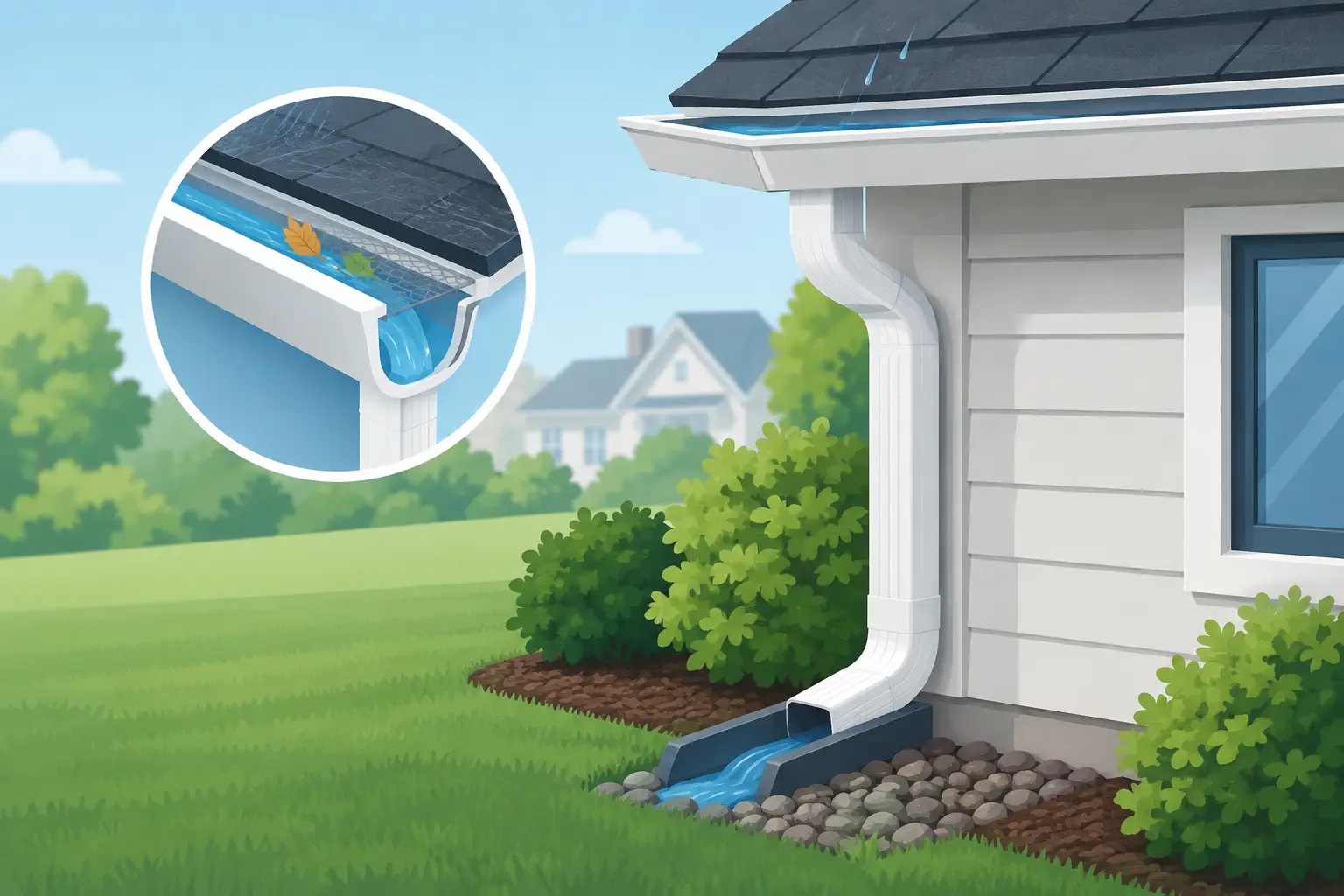
Getting water from the roof into a downspout is only half the job. The water must also be moved away from the home. A downspout that ends directly beside the foundation can leave the soil saturated, even when the gutters themselves are working correctly.
Extensions direct water farther out into the yard, ideally toward an area that naturally drains away from the house. The best distance varies by lot layout, grading, and soil conditions, but the goal is consistent: keep roof runoff from collecting at the foundation.
For some properties, above-ground extensions are practical and easy to maintain. For others, buried drainage piping may provide a cleaner result and keep walkways clear. Underground systems should be installed carefully with the correct slope and a suitable outlet location. A buried pipe that cannot drain properly can create a hidden backup problem, so this option is best planned around the property’s existing grading.
Gutter Guards Can Help, But They Are Not a Complete Fix
Gutter guards can reduce the amount of leaves, pine needles, and roof debris entering the system. For homes surrounded by mature trees, they can make maintenance easier and help keep water flowing through downspouts.
However, guards do not correct poor pitch, insufficient gutter capacity, loose fasteners, or drainage issues at ground level. They also require professional selection. A guard that works well with large leaves may not perform the same way around pine needles, seed pods, or heavy roof runoff.
The best approach is to first make sure the gutter system is correctly sized, securely installed, and properly drained. Guards can then serve as a useful addition, not a substitute for sound installation.
Signs Your Home Needs Better Gutter Drainage Solutions
Some drainage problems are easy to spot during a rainstorm. Others develop slowly and are noticed only after damage appears. Watch for water pouring over gutter edges, gutters pulling away from the house, puddles near the foundation, peeling paint on trim, or streaks on siding.
You may also see soil washing out beneath downspouts, mulch scattered across beds, or mildew developing near lower exterior walls. Inside the home, musty basement odors or moisture near foundation walls can sometimes be connected to poor exterior water management.
Ice is another warning sign. Icicles alone do not always mean the gutters are at fault, since attic insulation and ventilation can contribute to ice dams. Still, gutters that hold standing water or drain too slowly can make winter conditions worse. A professional inspection can separate a gutter issue from a roofing or attic ventilation issue before repairs are planned.
Replacement Is Often Smarter Than Repeated Repairs
Small repairs make sense when a newer gutter system has one loose hanger, a damaged elbow, or a localized leak. Repeated patching is less cost-effective when gutters are sagging in multiple places, seams leak regularly, sections are rusted, or the system was poorly designed from the beginning.
Seamless aluminum gutters are a dependable choice for many Connecticut homes because they are durable, low-maintenance, and made to fit the home’s measurements. Fewer seams can mean fewer common leak points along long gutter runs. Quality hangers, properly placed downspouts, and secure attachment to sound fascia are equally important to the finished result.
If fascia boards or roof edge components have water damage, those issues should be addressed during the gutter project. Installing new gutters over deteriorated wood may hide the problem temporarily, but it does not provide a durable foundation for the new system.
Coordinate Gutters With Roofing and Siding Work
Gutters connect closely with other exterior parts of the home. Roof replacement, siding replacement, trim repairs, and gutter installation are often best evaluated together. This helps ensure flashing, fascia, drip edge, and gutter placement work as one system.
For example, a roof’s drip edge should guide water into the gutter rather than behind it. New siding and trim should be protected from overflow and properly finished around downspouts. Coordinating the work can prevent avoidable rework and give the home a more consistent appearance.
Siding Unlimited CT helps homeowners look at these exterior components as connected parts of one protective system. With more than 20 years of experience, professional installation crews, and a focus on quality workmanship, the goal is a drainage setup that performs reliably through every season.
A Professional Assessment Saves Guesswork
A proper gutter assessment should look beyond visible debris. The contractor should evaluate roof runoff patterns, gutter size, existing slope, hanger condition, downspout placement, fascia condition, and where water goes after it reaches the ground.
This is especially valuable on homes with previous water problems. The right recommendation may be as simple as adding extensions and correcting a section of pitch. In other cases, larger gutters, additional downspouts, new guards, or full replacement may be needed. A clear quote and a practical explanation of the work help homeowners choose improvements that fit both the home and the budget.
Water will always find the easiest path. Make sure that path leads away from your roof, siding, and foundation, not into the areas that cost the most to repair.
Share this post