A gutter problem rarely starts with a dramatic failure. More often, it starts with a drip at a joint, water spilling near the foundation during a hard rain, or a section pulling away after a Connecticut winter. When replacement is needed, homeowners often face one key decision: sectional gutters versus seamless gutters. The right option depends on your roofline, budget, maintenance expectations, and the condition of the rest of your exterior.
Both systems can move rainwater away from your home when properly designed and installed. The difference is how the gutter runs are made, where they connect, and how likely those connection points are to need attention over time.
Sectional Gutters Versus Seamless Gutters: The Main Difference
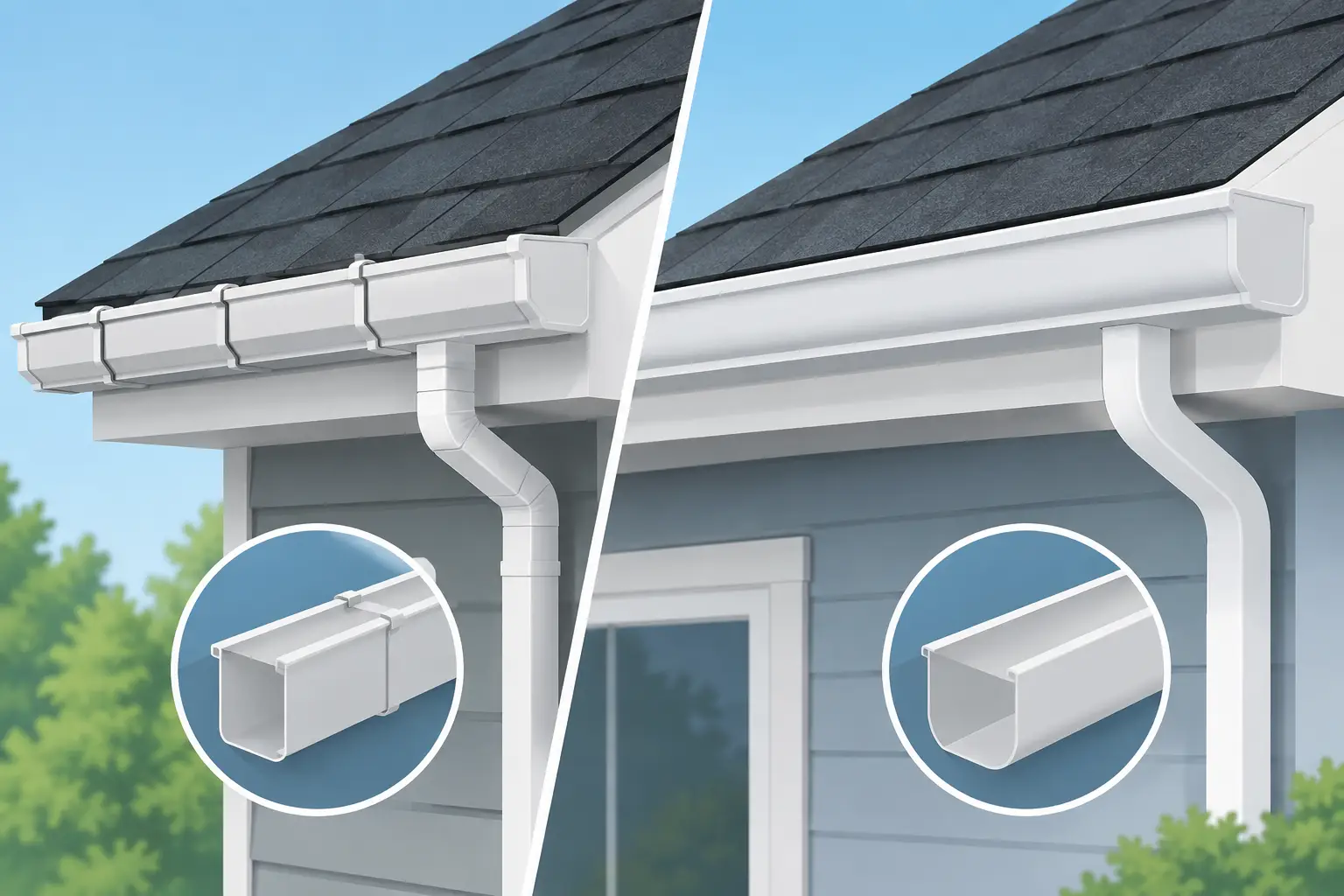
Sectional gutters are assembled from pre-cut pieces. Straight lengths, corners, end caps, outlets, and connectors are joined together during installation. They are widely available in common materials and sizes, and they can be installed on many homes without custom fabrication.
Continuous gutters are formed to the exact length of each roof edge at the job site. A professional crew uses a gutter-forming machine to shape a long piece of metal that fits the run of your home. Corners, end caps, and downspout outlets still require connections, but there are far fewer joints along the straight sections.
That distinction matters because joints are the most common locations for gutter leaks. Sealant can age, fasteners can loosen, and debris can collect at connection points. Fewer joints generally mean fewer opportunities for water to escape where it should not.
Why Joints Matter on Connecticut Homes
Connecticut gutters must handle more than a light summer shower. They deal with spring rain, falling leaves, freeze-thaw cycles, snowmelt, and occasional heavy storms. Water that leaks or overflows can saturate soil around the foundation, damage fascia boards, stain siding, and create icy walkways near entry points.
With sectional systems, every connector is a maintenance point. This does not mean sectional gutters always fail early. A quality installation with proper slope, strong hangers, and routine cleaning can serve a home well. But the larger the home and the longer the gutter runs, the more seams there are to inspect over the years.
A continuous system reduces the number of straight-run connections significantly. For homeowners who want a cleaner appearance and less long-term attention to joint sealant, that is often a meaningful advantage. It is particularly useful on rooflines with long, uninterrupted eaves.
Cost: Upfront Price Versus Long-Term Value
Sectional gutters are usually the lower-cost choice at the start. Because the components are pre-made and available through many retail and supply channels, material costs can be lower. Repairs can also be simple when damage is limited to one short piece or connector.
Custom-formed gutters generally cost more because they require specialized equipment, professional measurement, and on-site fabrication. The material is cut to your home rather than selected from standard lengths. For many homeowners, the higher initial investment is justified by the custom fit, cleaner finish, and reduced number of potential leak points.
The lowest installation price is not always the best value. If a less expensive gutter system has poor slope, undersized downspouts, weak attachment, or inadequate drainage away from the house, it can create expensive exterior problems later. The goal is not simply to hang new gutters. It is to manage roof runoff reliably.
Appearance and Curb Appeal
Both options are available in colors that can coordinate with siding, trim, roofing, and soffit. On a well-installed system, most homeowners will not focus on the gutter itself. They will notice whether it looks straight, fits the roofline, and complements the exterior.
Continuous gutters have a more tailored appearance because long sections are formed to fit the home. There are fewer visible connectors breaking up the line under the eaves. This can be especially appealing on front elevations, larger homes, and homes receiving new siding, windows, roofing, or trim work at the same time.
Sectional products can still look professional, but their connectors are more visible. On a budget-conscious replacement or a small utility area that is not highly visible, that trade-off may be perfectly reasonable.
Installation Quality Matters More Than the Label
The comparison between sectional gutters versus seamless gutters can make it sound as if one material choice decides everything. It does not. A poorly installed custom-formed system will not perform as well as a carefully installed sectional system.
Professional installation starts with evaluating the roofline and water flow. Gutters need the correct pitch so water reaches the downspouts without standing in the trough. They need secure hangers spaced appropriately for the material and local weather conditions. Downspouts must be sized and placed to handle the roof area draining into each run.
The discharge point is just as important. Downspouts should carry water away from the foundation, not dump it directly beside the house. If grading directs water back toward the foundation, gutter improvements may need to be paired with extensions or other drainage corrections.
Fascia condition also deserves attention before installation. Rotting or softened fascia may not hold gutter fasteners securely. Replacing damaged wood and correcting related roof-edge issues before new gutters go up helps protect the investment.
Maintenance Expectations
No gutter system is maintenance-free. Leaves, pine needles, roof granules, small branches, and wind-blown debris can block water flow in any gutter. Homeowners should have gutters cleaned as needed and inspect them after major storms, especially if mature trees overhang the roof.
Sectional systems may require more frequent inspection at their connectors. Look for staining, drips, separation, loose fasteners, and sealant that has cracked or pulled away. Catching a small joint issue early is far easier than repairing water-damaged trim or siding later.
Continuous systems reduce the number of straight-run joints, but they still need cleaning and occasional inspection. Corners, end caps, and outlets remain areas where buildup or leaks can occur. Gutter guards can reduce the amount of debris entering the system, but they are not a replacement for proper drainage design or periodic service.
Which Gutter Type Is Right for Your Home?
Sectional gutters can be a practical option when budget is the primary concern, the roofline is short and simple, or a small area needs a targeted replacement. They can also make sense when matching an existing system is important and the current gutters are otherwise performing well.
Custom-formed gutters are often the better fit for homeowners replacing an entire system, updating the exterior, or looking for fewer joints and a more finished appearance. They are especially worth considering for long roof runs, homes with recurring leaks at connectors, and properties where reliable water control is a priority.
Material should be part of the conversation as well. Aluminum is a common residential choice because it is lightweight, resists rust, and is available in many colors. Other materials may suit certain architectural styles or project requirements, but the best choice should account for your home, local conditions, and budget rather than appearance alone.
Plan Gutters as Part of the Whole Exterior
Gutters work alongside the roof, fascia, soffit, siding, windows, and foundation drainage. If roofing is near the end of its service life or fascia boards show damage, coordinating the work can prevent duplicate labor and help create a cleaner finished result. It also gives the installer a chance to address water-management issues before they affect newly replaced siding or trim.
A professional inspection can identify whether you need full replacement, a repair, larger downspouts, improved drainage, or corrections to the gutter pitch. Siding Unlimited CT brings more than 20 years of exterior improvement experience to help Connecticut homeowners make practical decisions based on the condition of the home, not a one-size-fits-all recommendation.
The best gutter system is the one that fits your roofline correctly, carries water where it belongs, and is installed with the same care you expect from every other part of your home exterior. A detailed quote and on-site evaluation are the right place to start.
Share this post