A roof can look perfectly sound from the street while excessive heat and moisture are building underneath it. That hidden stress can shorten shingle life, raise cooling costs, and create conditions that lead to mold, wood damage, and ice dams. Proper roof ventilation for homes is not an optional finishing detail. It is part of a roofing system designed to protect the home year-round.
For Connecticut homeowners, the issue matters in every season. Summer attic heat can push into living spaces and overwork air conditioning. Winter moisture can condense on cold roof framing, while uneven roof temperatures contribute to ice buildup along the eaves. A professional roofing evaluation can determine whether ventilation is working as intended or whether an upgrade should be part of a roof repair or replacement project.
What Roof Ventilation Does for Your Home
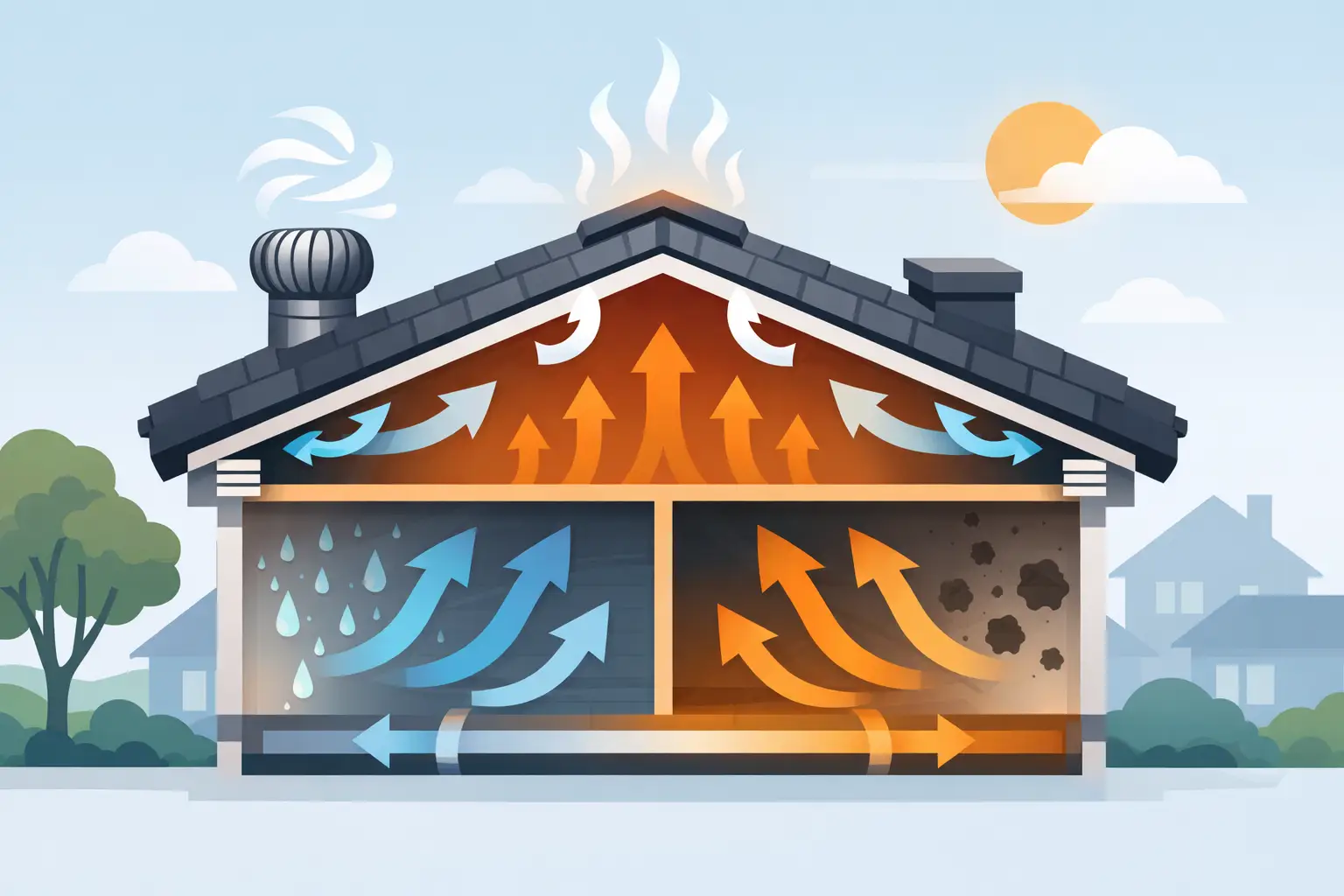
A well-designed ventilation system keeps air moving through the attic space. Cooler, drier air enters through intake vents near the lower edge of the roof, usually at the soffits. Warmer air and moisture rise and leave through exhaust vents placed higher on the roof or along the ridge.
That movement helps manage two common problems: trapped heat and trapped moisture. In warm weather, it reduces the extreme temperatures that build up beneath the roof deck. It will not replace attic insulation or solve an air-conditioning problem on its own, but it supports a more efficient home envelope.
During colder months, ventilation helps remove moisture that reaches the attic from normal household activity, such as cooking, showering, and laundry. Insulation and air sealing are still essential because they limit how much warm, moist indoor air enters the attic in the first place. Ventilation is the next line of defense, helping that space dry when conditions change.
Signs Your Roof May Have a Ventilation Problem
Some warning signs are visible from inside the house, while others appear on the roof itself. A contractor should look at the full system before making a recommendation, since similar symptoms can also be caused by insulation gaps, roof leaks, or aging materials.
Common signs include:
- Upstairs rooms that stay uncomfortably hot during summer, even when the air conditioning is running.
- Condensation, staining, mildew odor, or visible mold on attic framing or insulation.
- Frost on the underside of the roof deck during cold weather.
- Recurring ice dams, especially along roof edges and gutters.
- Shingles that curl, crack, or appear to wear out sooner than expected.
- A noticeably damp or stuffy attic with no clear plumbing or roof leak.
Ice dams deserve special attention in Connecticut. They form when heat escaping from the home warms the upper roof, melting snow that refreezes near colder eaves. Inadequate insulation and air leaks are often the main cause, but poor attic ventilation can make the temperature imbalance worse. The right solution may involve more than adding a vent. It may require targeted air sealing, insulation corrections, and a ventilation layout that matches the roof design.
The Main Parts of a Balanced Ventilation System
Effective ventilation depends on balance. Exhaust vents cannot pull enough air from an attic if there is no reliable intake. Adding more exhaust without adequate intake may even draw air from the home through ceiling gaps, bringing additional moisture into the attic.
Intake Vents
Intake ventilation is usually installed at the soffits, the finished underside of the roof overhang. Continuous soffit vents can provide consistent airflow across the lower roofline, while individual vents may be used where construction limits the available space.
Soffit vents need a clear air path into the attic. Insulation installed tightly against the roof edge can block airflow, which is why installers often use baffles to maintain an open channel from the soffit to the attic. This is a small detail with a major effect on performance.
Exhaust Vents
Exhaust vents are installed near the highest point of the roof because hot air naturally rises. Ridge vents are a common choice on homes with a continuous roof ridge. When installed correctly, they provide low-profile, even ventilation without changing the appearance of the roof significantly.
Other roof designs may need box vents, off-ridge vents, or powered attic ventilators. Each option has a place, but no single product is right for every home. A complicated roofline, limited soffit area, cathedral ceilings, or an unfinished attic can all affect the best approach.
Powered attic fans can help in specific situations, but they must be sized and installed carefully. If the attic lacks sufficient intake ventilation or has air leaks at the ceiling plane, a powerful fan may pull conditioned air from the living area. That can increase energy use instead of reducing it.
Why Ventilation Should Be Evaluated During Roof Replacement
Roof replacement is often the best time to address ventilation because the roofing system is already being opened and rebuilt. It gives your contractor the opportunity to inspect the roof deck, confirm the condition of existing vents, and correct details that are difficult to reach once new shingles are installed.
A quality installation considers more than shingle color and material. It also accounts for underlayment, flashing, ice and water protection, drainage, attic airflow, and the condition of the decking underneath. These elements work together. A premium shingle cannot deliver its expected service life if the roof deck below it is repeatedly exposed to heat or moisture.
Homeowners should also be cautious about mixing several types of exhaust ventilation on the same roof. For example, ridge vents combined with gable vents or powered fans can disrupt the intended airflow path. Rather than drawing fresh air from soffits, the system may pull air through the nearest available opening. A professional assessment helps avoid that kind of expensive guesswork.
Ventilation, Insulation, and Air Sealing Work Together
Roof ventilation is sometimes treated as the answer to every attic problem. It is not. A healthy attic depends on three related parts of the home: air sealing, insulation, and ventilation.
Air sealing limits warm indoor air from escaping through gaps around light fixtures, attic hatches, plumbing penetrations, and other openings. Insulation slows heat transfer between the living area and attic. Ventilation allows the attic to release heat and moisture that still accumulate. When one part is missing, the others have to work harder.
This is why a homeowner with heavy insulation can still have ice dams, or why adding a roof vent may not solve an overheated second floor. The roof, attic, siding, windows, gutters, and insulation all affect how the home manages water, air, and temperature. Looking at the entire exterior system produces better long-term results than treating one symptom at a time.
When to Call a Roofing Professional
A professional inspection is worthwhile if you see moisture in the attic, have repeated ice dams, notice premature shingle wear, or are planning a roof replacement. The contractor should inspect the attic when possible, not just count the vents visible from outside.
Ask whether the intake and exhaust areas are balanced, whether soffit vents are blocked, and whether the existing roof configuration suits the home. You should also ask if signs of moisture point to a roof leak, condensation, or both. Clear answers and a detailed scope of work are more valuable than a quick recommendation to add another vent.
With more than 20 years of exterior renovation experience, Siding Unlimited CT helps homeowners evaluate roofing concerns with practical recommendations and professional installation standards. The goal is not to sell unnecessary components. It is to build a roofing system that protects the home, performs reliably, and makes sense for its design and condition.
Your attic should not be an afterthought when you invest in your roof. If heat, moisture, or recurring winter problems are showing up inside your home, a careful ventilation assessment can help identify the cause before a small issue becomes a larger repair.
Share this post