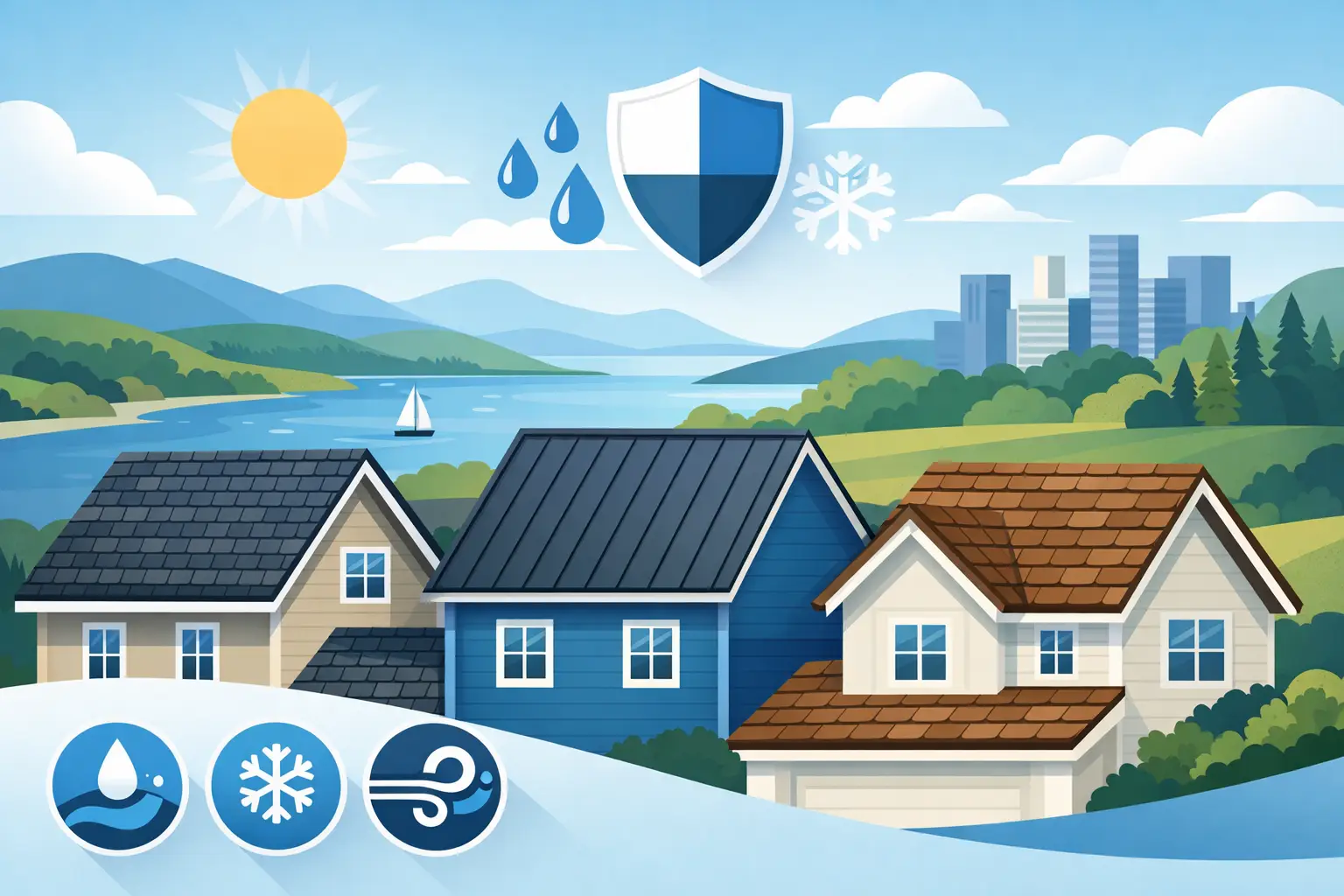
A Connecticut roof can look fine from the driveway while wind-lifted shingles, failing flashing, and trapped moisture are already shortening its life. Choosing the best roofing materials for durability means looking beyond color and upfront cost. Your roof needs to handle snow loads, freeze-thaw cycles, summer heat, driving rain, and strong seasonal winds without creating a constant repair concern.
The right choice depends on your home’s structure, roof slope, budget, and how long you plan to stay in the house. Material quality matters, but so do the underlayment, ventilation, flashing, and installation standards behind it. A premium roof installed incorrectly will not deliver premium performance.
How Connecticut Weather Affects Roof Life
Connecticut homes experience a wide range of weather in a single year. Winter snow and ice can stress roof edges and gutters. Repeated freezing and thawing can widen small cracks, loosen fasteners, and allow water beneath worn shingles. Spring storms bring wind and heavy rain, while humid summers create conditions where poor attic ventilation can lead to excess heat and moisture.
That is why durability is more than a manufacturer’s stated lifespan. A durable roofing system sheds water efficiently, resists wind damage, manages attic moisture, and remains stable through changing temperatures. It should also work with the style and framing of your home.
For many homeowners, a roof replacement is an opportunity to improve energy efficiency as well. Proper ventilation and insulation help reduce heat buildup in the attic, which can support a more comfortable home and reduce unnecessary strain on your heating and cooling system.
Best Roofing Materials for Durability
Architectural asphalt shingles
Architectural asphalt shingles are the most practical choice for many Connecticut homes. Also called dimensional shingles, they are thicker and more durable than basic three-tab shingles. Their layered design adds depth, improves wind resistance, and gives homeowners a broad range of color options.
A professionally installed architectural shingle roof can commonly provide 25 to 30 years of service, with some premium systems designed for longer performance. Actual lifespan depends on ventilation, storm exposure, roof pitch, and maintenance. These shingles offer a strong balance of cost, curb appeal, repairability, and dependable protection.
For most homeowners seeking quality at a reasonable price, architectural shingles are often the best overall value. Look for a complete roofing system rather than shingles alone. Ice and water protection at vulnerable areas, quality synthetic underlayment, properly installed flashing, and balanced ventilation all help the roof perform as intended.
Metal roofing
Metal roofing is one of the longest-lasting options available for residential properties. Standing seam metal roofs, in particular, are known for their clean appearance, strong weather resistance, and long service life. A properly installed metal roof can last 40 to 70 years or more, depending on the material and conditions.
Metal sheds snow and rain effectively, resists fire, and can perform well in high winds when installed with the correct fastening system. It is also lightweight compared with slate or tile, making it suitable for many existing homes without major structural changes.
The trade-off is cost. Metal roofing usually requires a larger upfront investment than asphalt shingles, and installation requires specialized experience. Details around chimneys, valleys, skylights, and wall transitions must be handled correctly. Homeowners should also understand that rain can be more noticeable on a metal roof, although proper attic insulation and roof assembly can reduce sound inside the home.
Metal is a smart option for homeowners planning to stay in their homes for decades or those who want to minimize future roof replacements.
Slate roofing
Natural slate has an unmatched reputation for longevity. A high-quality slate roof can last 75 to 100 years, and in some cases much longer. It offers a distinctive appearance, resists fire, and stands up well to harsh weather when the roof structure and installation are appropriate.
However, slate is not the right material for every home. It is heavy, expensive, and requires an experienced installer who understands slate-specific flashing, fastening, and repair methods. The home’s framing may need to be evaluated before installation because of the added weight.
Slate also has a different maintenance profile. The stone itself can last for generations, but flashings, fasteners, and individual tiles may still need attention over time. For historic homes or homeowners committed to a premium, long-term exterior investment, slate can be an excellent choice. For a typical roof replacement budget, it may be more than necessary.
Synthetic slate and composite roofing
Synthetic slate and composite shingles are designed to offer the appearance of natural materials with less weight and often lower maintenance requirements. Depending on the product, these roofing systems may mimic slate, cedar shake, or other high-end styles while providing strong impact resistance and weather performance.
This category can be a good fit for homeowners who want a distinctive roof without the structural demands of natural slate. Many composite products are engineered to resist cracking, fading, moisture absorption, and impact from hail or falling debris. Lifespans often range from 30 to 50 years, though product quality varies significantly.
The key is selecting a proven product and having it installed according to manufacturer specifications. Composite materials are not all the same, and a lower-priced option may not provide the performance or appearance homeowners expect after years of weather exposure.
Cedar shake roofing
Cedar shake provides a warm, traditional appearance that suits certain Colonial, Cape, and historic Connecticut homes. It can last 20 to 30 years or longer with quality materials, good airflow, and regular maintenance. Cedar naturally offers insulation value and curb appeal that is difficult to duplicate.
Its main drawback is maintenance. Wood roofing can be affected by moisture, moss, mildew, insects, and weathering. It needs periodic inspection and care to prevent premature deterioration. Cedar also costs more than asphalt and may not be the most practical choice for homeowners who want the lowest-maintenance roof possible.
The Material Is Only Part of a Durable Roof
Roofing materials do not work alone. The most expensive shingles or metal panels can fail early if water reaches the decking, attic moisture has nowhere to escape, or flashing is poorly installed. A durable roof is a complete system built around the specific conditions of your home.
Professional installers should inspect the roof deck for rot or soft spots before covering it. They should use appropriate protection at eaves, valleys, and roof penetrations, where leaks most often begin. Chimneys, vents, skylights, and wall intersections need properly integrated flashing, not quick surface fixes.
Ventilation also deserves attention. Inadequate intake and exhaust ventilation can trap hot, moist air in the attic. Over time, that can contribute to damaged decking, shortened shingle life, mold concerns, and higher cooling costs. A qualified contractor evaluates the entire roof assembly rather than simply placing new materials over an existing problem.
Choosing the Right Roof for Your Home
If you want dependable protection at the most accessible price point, architectural asphalt shingles are usually the strongest choice. If long-term ownership and low replacement frequency are your priorities, metal roofing can justify its higher initial cost. Slate offers exceptional longevity and character but requires the right structure and investment. Composite roofing provides an appealing middle ground for homeowners who want the look of slate or shake with less weight and maintenance.
It also helps to consider the rest of the exterior. Aging gutters, damaged fascia, poor attic ventilation, and worn siding can all affect how well your home manages water and weather. Addressing these items during a roof project may prevent future repairs and create a cleaner finished result.
At Siding Unlimited CT, experienced crews help homeowners compare roofing options based on their budget, home style, and long-term goals. The objective is not to sell the most expensive material. It is to install a roofing system that delivers reliable protection, professional workmanship, and lasting value.
A roof replacement should leave you confident when the forecast turns. Start with a thorough inspection and a clear, detailed quote, then choose the material and installation approach that will protect your home for the years ahead.
Share this post