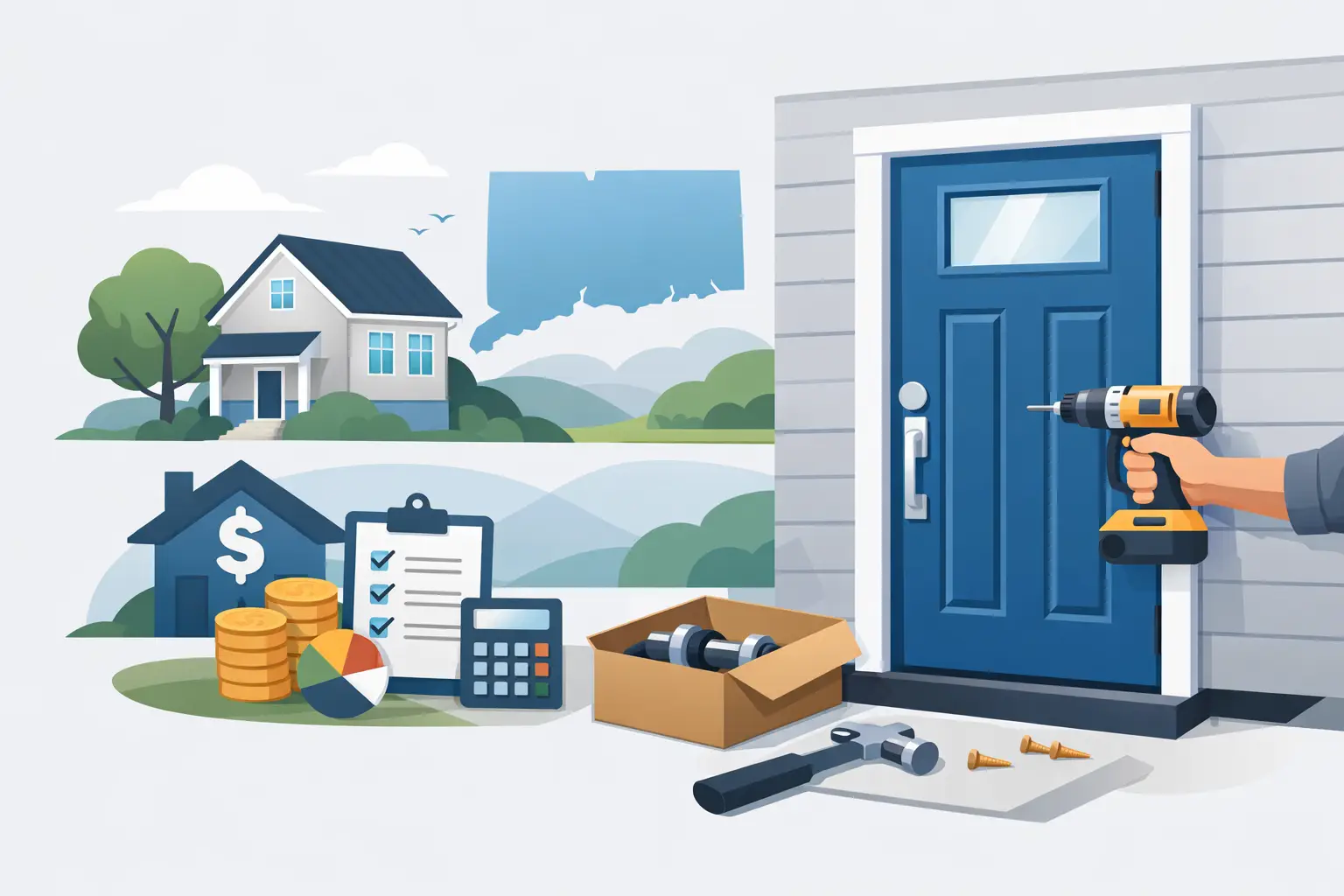
A new entry door is one of the few exterior upgrades you notice every time you come home. It affects curb appeal, daily comfort, security, and heating costs. The entry door replacement cost for a Connecticut home depends on the door material, opening size, glass options, hardware, and the condition of the existing frame.
For most homeowners, a professionally installed entry door is not a one-price project. A basic replacement in a standard opening may be straightforward, while a custom door system with sidelights, decorative glass, structural repairs, or a widened opening requires more labor and planning. The right choice is the one that fits your home, budget, and long-term expectations.
What Does Entry Door Replacement Cost?
In Connecticut, homeowners can generally expect a professionally installed entry door to range from about $1,200 to $8,000 or more. A simple steel door in an existing, sound frame is typically toward the lower end. Premium fiberglass or wood doors, custom sizes, sidelights, transoms, and extensive trim or framing work can move the project well above that range.
These are planning figures, not a substitute for an on-site estimate. Every home has different conditions behind the exterior trim. Water damage, settling, outdated construction, and previous installation issues can affect the final scope once the existing door is removed.
| Door option | Typical installed cost range | Best fit for | |—|—:|—| | Basic steel entry door | $1,200-$3,000 | Homeowners seeking security and value | | Fiberglass entry door | $2,000-$5,500 | Energy efficiency, durability, and low maintenance | | Wood entry door | $4,000-$10,000+ | Traditional character and custom appearance | | Door system with sidelights or transom | $4,500-$12,000+ | Larger entryways and a higher-end exterior update |
A reliable contractor should explain what is included in the quote: removal and disposal of the old door, installation, insulation, flashing, exterior trim, interior casing work if needed, hardware installation, and cleanup. Comparing two prices only makes sense when the scopes of work are equally clear.
The Biggest Factors Behind Door Replacement Pricing
Door material and construction
Steel is often the most affordable entry door material. It offers strong security and can perform well when properly finished and maintained. Lower-cost steel doors may be more likely to dent, and a damaged finish can create an opportunity for rust over time.
Fiberglass costs more upfront, but it is a popular option for Connecticut homes because it holds up well through cold winters, humid summers, and changing weather. Quality fiberglass doors resist warping, do not rust, and are available in smooth finishes or realistic wood-grain styles. Many insulated fiberglass models also provide excellent energy performance.
Wood doors offer a distinctive look that is hard to duplicate, particularly on historic or high-end homes. They can be painted or stained to match the home, but they require regular care to protect against moisture and sun exposure. Wood is often best for homeowners who place a high value on architectural detail and are prepared for the maintenance that comes with it.
Door size, style, and glass
A standard single door costs less than an oversized door or a complete entry system. Adding sidelights or a transom brings more natural light into the home and creates a grander entrance, but it also increases material costs and installation time.
Decorative glass, privacy glass, internal blinds, multi-point locking systems, custom paint colors, and upgraded handlesets can all affect the price. These features are not automatically unnecessary extras. For example, insulated glass and well-built weatherstripping can make a noticeable difference in a drafty front entry. The key is choosing upgrades that solve a real need rather than selecting features based on appearance alone.
Condition of the existing opening
The existing frame has a major impact on entry door replacement cost. If the door is square, the sill is solid, and the surrounding wall is dry, replacement can be relatively efficient. If there is rot around the jamb, water damage under the threshold, loose framing, or damaged exterior trim, those issues should be repaired before the new door is installed.
Covering damaged wood with new trim may look acceptable briefly, but it does not address the source of the problem. Professional installation means creating a properly sealed opening that helps prevent future water intrusion, air leaks, and premature door damage.
Labor, trim, and finishing details
The door itself is only part of the project. A long-lasting installation requires accurate measurements, a level and plumb frame, proper shimming, insulation around the jamb, and flashing that directs water away from the opening. Exterior casing, brick molding, PVC trim, and interior finish work may also be needed to give the new entry a clean, complete look.
Labor costs can rise when an old door is difficult to remove, the opening must be resized, or the home has masonry, stone veneer, aluminum siding, or detailed trim around the entry. These details are why an in-person assessment is more dependable than an online price calculator.
When a Lower Price Can Cost More Later
A low quote can be appealing, especially when the old door is visibly worn or no longer closing properly. But a door installation is not the place to cut corners on fitting and weather protection. A quality door installed poorly can still leak air, stick, allow water into the wall, or fail to lock correctly.
Be cautious if a quote does not identify the door brand or model, leaves out trim and disposal, or does not address visible deterioration around the frame. It is also reasonable to ask how the installer will handle hidden rot if it is discovered after removal. Clear answers upfront help prevent unexpected changes during the project.
For a front door that gets daily use, professional workmanship is part of the value. The goal is not simply to hang a new slab. It is to install a complete entry system that operates correctly, seals tightly, and complements the rest of the exterior.
Choosing the Right Door for a Connecticut Home
Connecticut weather places real demands on exterior doors. Winter cold can expose air leaks around an aging jamb, while rain, snow, and freeze-thaw cycles can damage unprotected sills and trim. Homes near the shoreline may also need materials and finishes that stand up well to damp conditions and wind-driven rain.
For many homeowners, fiberglass offers the strongest balance of appearance, durability, and energy efficiency. Steel can be an excellent value for a side entry, garage-to-house door, or a budget-conscious front-door project. Wood remains a strong choice when the home’s style calls for it and maintenance is part of the plan.
Color and design deserve consideration, too. A front door should work with the siding, roofing, shutters, and exterior trim rather than compete with them. If you are planning new siding, replacement windows, or trim work, coordinating the projects can produce a more finished result and may reduce repeated labor around the same exterior areas.
How to Plan Your Door Replacement Budget
Start by identifying what is not working with the current door. Is the problem primarily appearance, a draft, water damage, poor security, or difficulty opening and closing? That answer helps determine whether you need a straightforward replacement or a more complete repair of the opening.
Next, set priorities. If energy efficiency and low maintenance are most important, put more of the budget toward a quality insulated fiberglass door and professional sealing. If curb appeal is the priority, consider whether glass, sidelights, or upgraded hardware will make the biggest difference. If the entry is damaged, reserve room in the budget for framing and trim repairs rather than spending every dollar on decorative options.
An on-site quote should include precise measurements and a discussion of the door style, finish, hardware, glass, trim, and installation details. At Siding Unlimited CT, experienced installation crews help homeowners understand the practical choices before work begins, so the finished door looks right and performs as it should.
A new entry door should feel solid when it closes, look appropriate for the home, and keep the weather where it belongs. Getting a detailed professional estimate is the best next step toward choosing a door that delivers lasting value instead of a short-term cosmetic fix.
Share this post