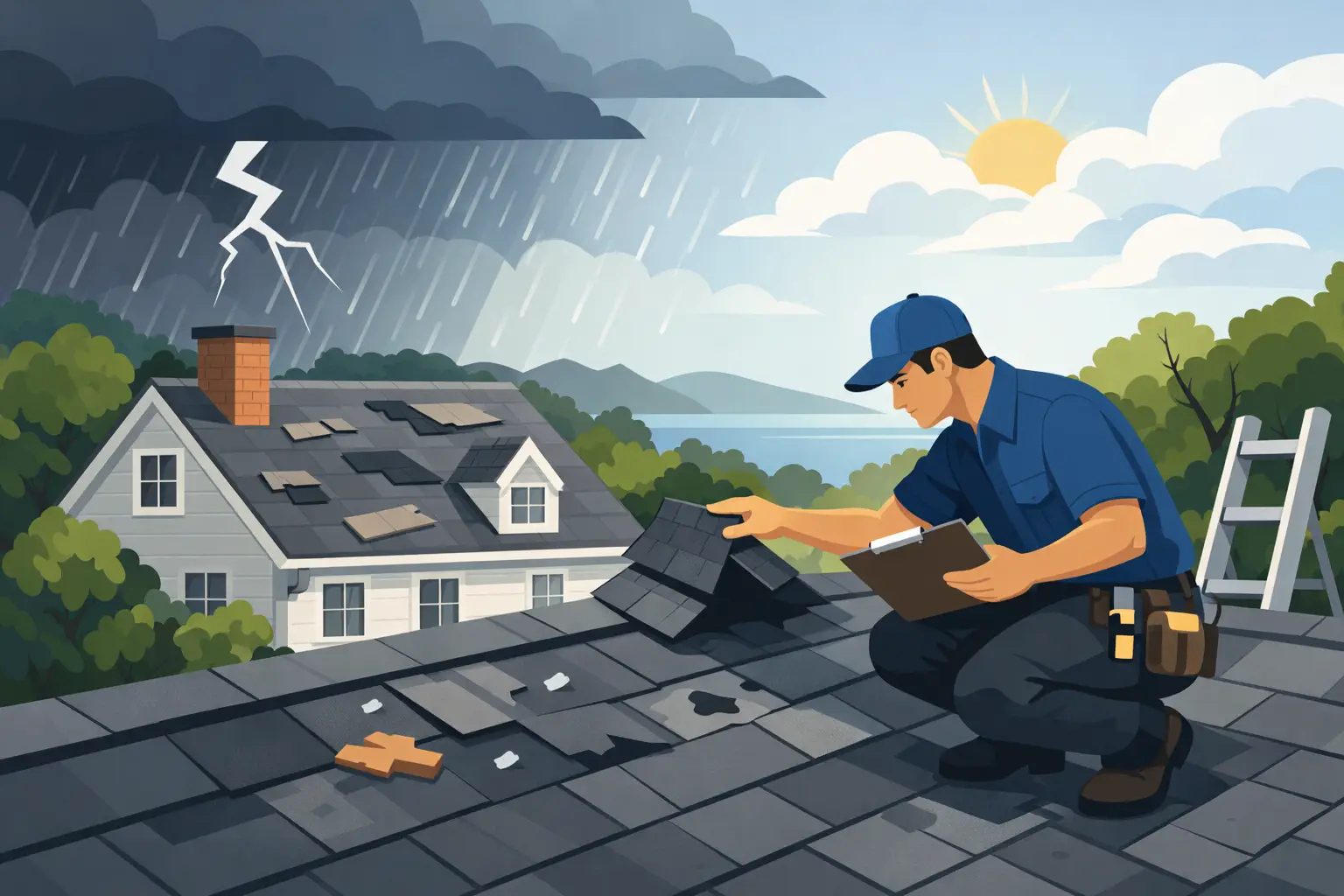
A missing shingle after a Connecticut windstorm may look minor from the yard. But water can reach the roof deck, insulation, and interior framing long before a stain appears on the ceiling. If you are asking how much to get a roof repaired, the honest answer depends on the source of the problem, how far the damage has spread, and how accessible the repair area is.
For most homeowners, professional roof repair is a far more manageable investment when the issue is caught early. A qualified contractor can identify whether the problem is limited to a few shingles or flashing details, or whether the roof needs more extensive work to protect the home.
How Much Does Roof Repair Cost in Connecticut?
Roof repair costs in Connecticut commonly range from a few hundred dollars for a small, straightforward repair to several thousand dollars for widespread damage, complicated leak tracing, or repairs involving structural components. A minor shingle repair may fall around $300 to $800. Repairs to flashing around a chimney, skylight, vent, or wall connection often run from $500 to $1,500, depending on the materials and roof access.
More substantial repairs, such as replacing damaged roof decking, addressing a larger leak area, or repairing multiple roof sections, can cost $1,500 to $5,000 or more. If the damage is extensive or the roof is nearing the end of its service life, replacement may provide better long-term value than repeatedly repairing failing areas.
These are planning ranges, not a substitute for an on-site quote. Every roof has different slopes, materials, penetrations, and prior repairs. The right estimate starts with finding the actual cause of the issue instead of simply covering the visible symptom.
What Determines How Much It Costs to Get a Roof Repaired?
The size of the damaged area matters, but it is only one part of the price. A small leak can require careful investigation because water does not always enter where it eventually appears indoors. It can travel along the roof deck or framing before becoming visible.
Type of roof damage
Loose or missing asphalt shingles are often among the simpler repairs when surrounding materials are in good condition. Cracked, curled, or deteriorated shingles may require a larger repair area to create a dependable match and seal.
Flashing repairs can be more involved. Flashing is the metal material used to direct water away from vulnerable areas, including chimneys, roof valleys, vents, skylights, and intersections where a roof meets a wall. When flashing fails, it can allow steady water intrusion even though the shingles themselves look acceptable.
Damage to roof decking or framing raises the scope and cost. Once moisture has softened wood beneath the shingles, the damaged materials need to be removed and replaced before new roofing can be installed properly. This is why a prompt repair usually costs less than waiting through another season of rain, snow, and freeze-thaw cycles.
Roof size, pitch, and access
A low-slope, single-story roof is generally easier and faster to repair than a steep roof with multiple levels. Steeper pitches require additional safety measures and take more time to work on. Access also affects labor. A repair over a garage may be relatively simple, while a similar repair above a three-story section, dormer, or tight landscaping can require more setup.
Complex rooflines add cost as well. Valleys, chimneys, skylights, vent stacks, and multiple transitions create more locations where water management must be handled precisely. They also increase the time needed to remove and reinstall materials correctly.
Roofing material and matching requirements
Asphalt shingles are the most common residential roofing material in Connecticut and are generally the most cost-effective to repair. However, matching an existing shingle color and style can be difficult on an older roof, especially after years of weather exposure.
Architectural shingles, metal roofing, cedar shakes, slate, and tile can require specialized materials and installation methods. The labor for these repairs may be higher, but the goal remains the same: restore a watertight roof without compromising surrounding materials.
A professional contractor will consider whether a small repair will blend well and perform as intended. In some cases, a repair is technically possible but may not be the most practical choice if the surrounding roof is brittle, heavily worn, or close to replacement age.
Hidden moisture damage
Water damage is rarely limited to what can be seen from the ground. A roof leak may affect the underlayment, decking, insulation, attic ventilation, trim, or interior drywall. Mold or rot can develop if the problem has been active for some time.
An accurate roof repair quote should account for any damaged materials discovered during inspection. That does not mean every repair turns into a major project. It means the contractor should explain the condition clearly and recommend work that protects the home rather than applying a short-term patch.
Common Roof Repairs and Typical Price Ranges
Small repairs can solve a problem effectively when the roof is otherwise in sound condition. The following ranges offer a general idea of what homeowners may encounter in Connecticut:
- Replacing a small number of damaged or missing shingles: about $300 to $800.
- Repairing flashing around a chimney, vent, skylight, or roof-to-wall area: about $500 to $1,500.
- Addressing a localized leak with shingle, underlayment, and minor decking repairs: about $1,000 to $3,000.
- Replacing rotted decking or repairing a larger damaged roof section: about $1,500 to $5,000 or more.
Emergency service, difficult access, premium materials, and storm-related damage can increase these ranges. Conversely, repairing an issue early, before water reaches the decking or interior, can keep the work more limited.
When Repair Makes Sense and When Replacement Is Smarter
A roof repair is usually a good option when the damage is isolated, the majority of the shingles remain in good shape, and the roof still has useful life remaining. For example, a few wind-damaged shingles or a failed flashing detail should not automatically mean replacing the entire roof.
Replacement may be the better investment when repairs keep appearing in different areas, shingles are widely cracked or losing granules, or the roof is near the end of its expected lifespan. An aging roof can also make matching materials difficult and leave homeowners spending money on repairs that only delay a larger project.
The decision should be based on condition, not just the lowest immediate price. A dependable contractor will explain both options, identify the risks of waiting, and help you choose the work that makes sense for your home and budget.
Do Not Wait for an Interior Leak
Roof problems often become more expensive after they reach the living space. By the time a ceiling stain appears, water may already have affected the layers above it. Watch for missing shingles, lifted edges, granules in gutters, damaged flashing, sagging roof areas, or water marks in the attic.
After a major storm, a visual check from the ground can help spot obvious issues. Still, avoid climbing onto the roof yourself. Professional inspection is the safer way to assess storm damage, find less visible problems, and determine whether repair is needed.
What a Professional Roof Repair Quote Should Include
A clear quote should explain the work being recommended, the materials involved, and the area being repaired. It should also distinguish between a targeted repair and a full replacement recommendation. Homeowners should feel comfortable asking what caused the damage, whether decking or underlayment may need attention, and what can be done to prevent the issue from returning.
At Siding Unlimited CT, our experienced crews focus on professional workmanship and practical recommendations for Connecticut homeowners. We inspect the condition of the roof carefully, communicate the scope clearly, and complete repairs with the attention to detail needed to protect your home.
A timely roof inspection can turn uncertainty into a clear plan. Whether the repair is small or more involved, addressing it before the next heavy rain gives your home the best chance of staying dry, efficient, and protected.
Share this post