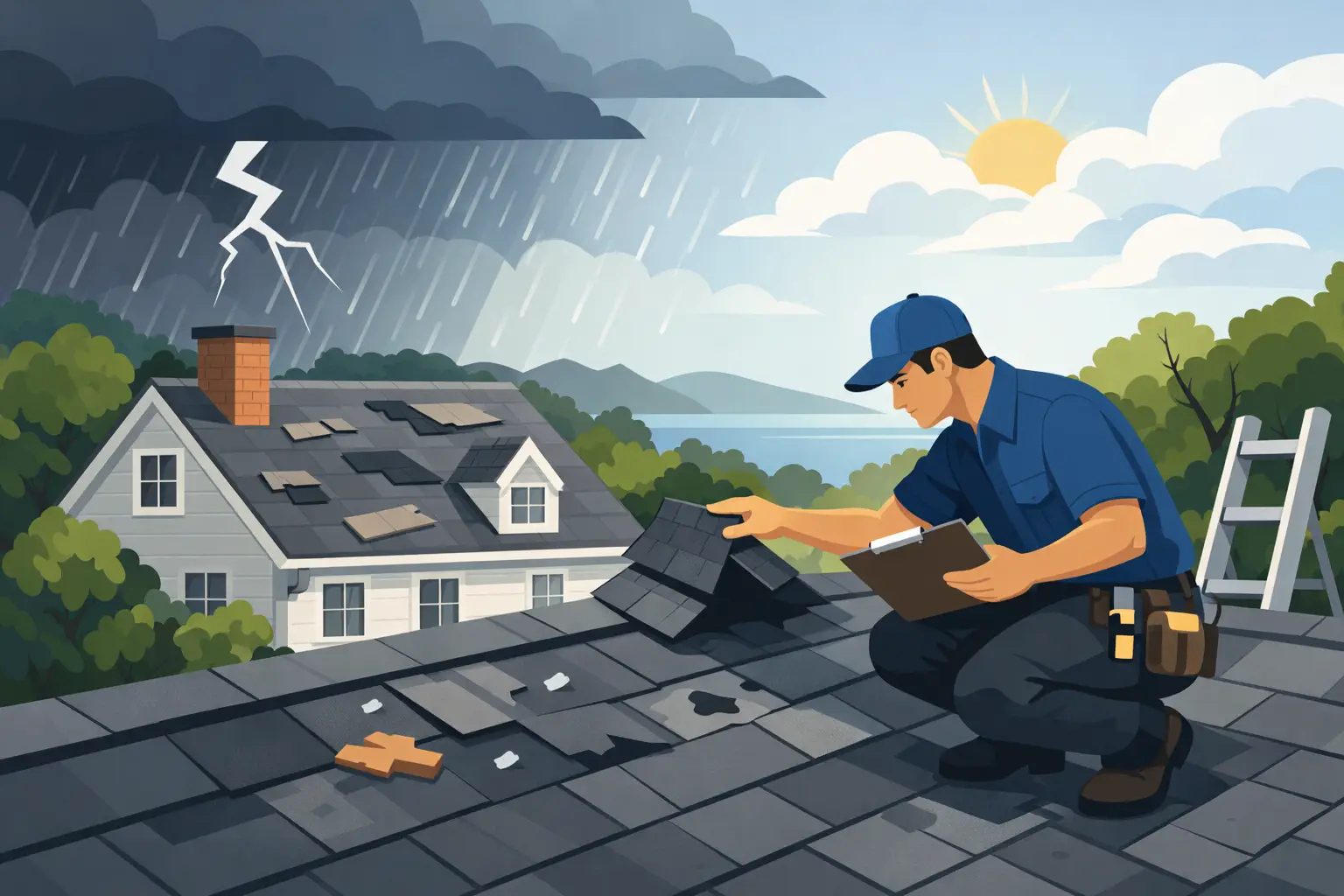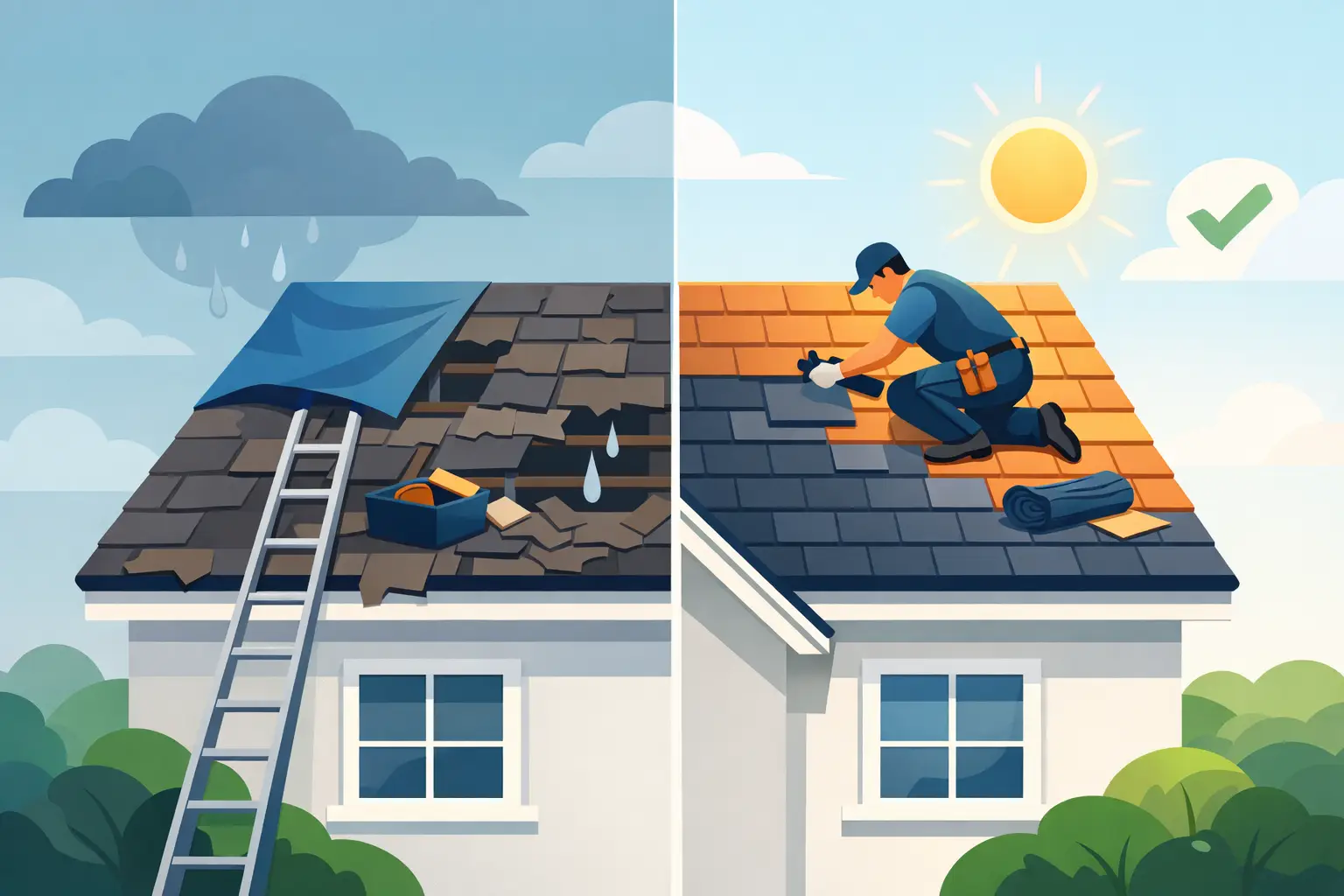
A ceiling stain after a Connecticut rainstorm can make any homeowner assume the worst. But can a roof be repaired instead of replaced? In many cases, yes. A focused repair can stop a leak, replace damaged materials, and extend the roof’s service life without the cost and disruption of a full replacement. The right answer depends on the age of the roof, the cause of the damage, and whether the underlying roofing system is still sound.
A professional inspection is the safest way to make that call. A visible leak is not always located directly above the stain, and what looks like a small shingle problem can sometimes point to worn flashing, damaged decking, poor ventilation, or aging materials across a larger area.
When Roof Repair Is a Smart Choice
Roof repair makes sense when damage is limited and the rest of the roof has years of dependable performance left. Strong shingles surrounding one damaged area, a sound roof deck, and no widespread moisture intrusion are all good signs that a repair may be the practical option.
Common repairable problems include a few missing or cracked shingles after high winds, loose flashing around a chimney or roof vent, a small leak near a pipe boot, or localized damage caused by a fallen branch. These issues should still be handled promptly. Water that enters through a small opening can travel beneath shingles and insulation before it appears inside the home.
A repair is also often worthwhile on a newer roof when the original materials are still available. Matching the existing shingle color and style helps maintain curb appeal while restoring protection where it is needed. Some color variation is normal as older shingles weather, but a qualified roofing contractor can help homeowners understand what to expect before work begins.
Can a Roof Be Repaired Instead of Replaced If It Leaks?
A leak does not automatically mean the roof needs replacement. Many leaks begin at transition points rather than in the main shingle field. Flashing around chimneys, skylights, dormers, walls, and vent pipes handles a great deal of water movement. When flashing loosens, corrodes, or was installed incorrectly, a targeted repair can often solve the issue.
The key question is whether the leak is isolated. One water stain caused by failed flashing may be repaired. Multiple stains in different rooms, recurring leaks after prior repairs, or soft areas in the roof deck point to a broader problem. In those situations, repeatedly patching the surface may only delay necessary replacement while moisture continues to affect the home.
Homeowners should also pay attention to attic conditions. Damp insulation, mold growth, musty odors, dark water marks on framing, or daylight visible through the roof structure all require prompt professional attention. Addressing moisture early protects not only the roof but also insulation, interior finishes, and air quality.
Signs Replacement May Be the Better Investment
Even quality roofing materials have a limited lifespan. Asphalt shingle roofs often last roughly 20 to 30 years, depending on the product, installation quality, ventilation, weather exposure, and maintenance. If an older roof needs frequent repairs, replacement may offer better long-term value.
Replacement is commonly recommended when shingles are curling, cracking, losing significant granules, or becoming brittle across large sections of the roof. Widespread missing shingles, exposed nail heads, sagging roof lines, or extensive soft decking are also serious concerns. These conditions can allow water to reach the structure beneath the shingles.
A roof that has already been repaired several times deserves an honest evaluation. Repairs are effective when they resolve a specific problem. They become less cost-effective when new trouble spots keep appearing because the materials have reached the end of their useful life. A full replacement can provide a more reliable system, updated flashing, improved underlayment, and a clear warranty path for the homeowner.
There is also a timing consideration. Waiting until water damage reaches ceilings, walls, or framing can turn a planned roofing project into a more expensive restoration job. If replacement is clearly approaching, scheduling it before the next severe season gives homeowners more control over budget and timing.
What a Professional Roof Inspection Should Determine
A thorough assessment should look beyond the shingles that are visible from the ground. The contractor should inspect the roof surface, flashing details, ridge caps, penetrations, gutters, drainage patterns, and the condition of the roof deck where accessible. The attic should also be evaluated for moisture and ventilation concerns.
The goal is to identify the source of the problem and determine its extent. For example, wind damage may affect only one roof slope, making repair reasonable. On the other hand, a leak around a vent may have damaged the surrounding decking and underlayment, requiring more than a simple shingle replacement.
Homeowners should expect a clear explanation of the findings, including whether repair will provide a dependable solution or simply serve as a short-term measure. A reputable contractor should not recommend replacement when a quality repair will do the job. Just as importantly, they should not recommend a quick patch when the roof system is no longer protecting the home reliably.
Connecticut Weather Changes the Equation
Connecticut roofs face year-round weather stress. Heavy rain, wind-driven storms, snow loads, ice dams, summer heat, and falling branches can all expose weaknesses in roofing materials. Freeze-thaw cycles are especially hard on flashing seals and small cracks because water expands as it freezes.
Ice dams deserve particular attention. When warm air escapes into the attic, snow can melt on the upper roof and refreeze near colder eaves. The resulting ice can push water beneath shingles. Repairing the affected materials is necessary, but the lasting solution may also involve improving attic insulation and ventilation. Roofing performance depends on the entire home envelope, not only the shingles.
Gutters matter as well. Clogged or damaged gutters can allow water to back up at the roof edge, saturate fascia boards, and contribute to leaks. If roofing and gutter issues appear together, addressing both at the same time can prevent repeat damage and protect the investment.
Repair Cost Versus Replacement Value
The lower upfront cost of a repair is attractive, and often justified. A targeted repair can restore protection quickly while helping homeowners avoid replacing a roof that still has substantial useful life left. This is especially true after isolated storm damage or when a single component has failed.
However, the cheapest immediate option is not always the best value. If a roof is near the end of its lifespan, needs repairs every year, or has widespread material failure, the total cost of repeated service calls can become difficult to justify. Replacement costs more initially, but it can reduce uncertainty, protect the home from hidden water damage, and improve curb appeal.
Energy efficiency can be part of the decision, too. A replacement project creates an opportunity to correct ventilation issues and install a complete, properly integrated roofing system. For homeowners planning other exterior work, coordinating roofing with gutter, siding, or window improvements may also make scheduling and long-term maintenance easier.
Make the Decision Before Damage Spreads
Do not wait for a small roof concern to become an interior repair. Missing shingles, granules collecting in gutters, loose flashing, roof-edge damage, and stains on ceilings are all reasons to schedule an inspection. Taking action early gives you more options and makes a repair more likely to be enough.
With more than 20 years of exterior renovation experience, Siding Unlimited CT helps homeowners make practical roofing decisions based on the condition of the home, not a one-size-fits-all answer. Whether the right solution is a focused repair or a full replacement, professional workmanship and quality materials make the difference.
Your roof does not need to look perfect to protect your home, but it does need to be sound. A timely inspection can replace guesswork with a clear plan and help keep the next storm outside where it belongs.
Share this post